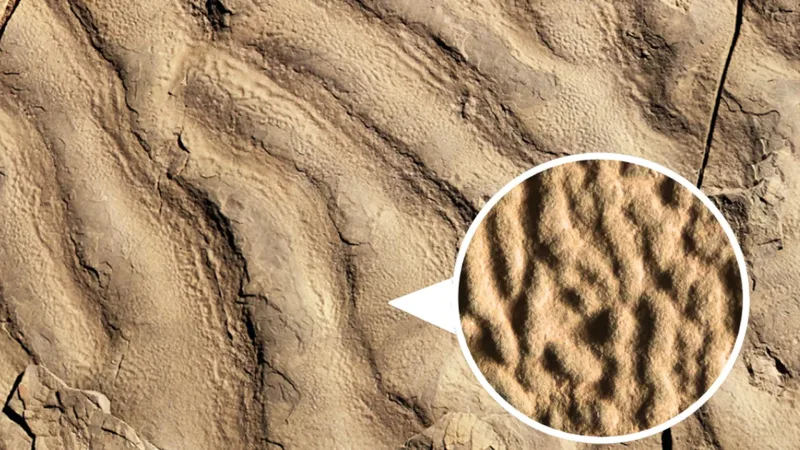
In 2016, geologist Rowan Martindale discovered unusual wrinkled textures on sedimentary rocks in Morocco, resembling elephant skin. Subsequent research has verified these structures as microbially induced sedimentary structures (MISS), formed by ancient microbial mats in deep-sea environments over 2.5 billion years ago.
The textures, scientifically documented in studies, are not fossils of the microbes themselves but the preserved physical structures they created. This finding provides crucial evidence for the existence of life in the deep, dark ocean during the Archean Eon, a time when Earth's atmosphere lacked significant oxygen.
This discovery helps scientists understand the early habitats where life could thrive without sunlight, relying on chemical energy from hydrothermal vents or other sources. It contributes to the broader study of life's origins and the potential for life in similar extreme environments on other planets.