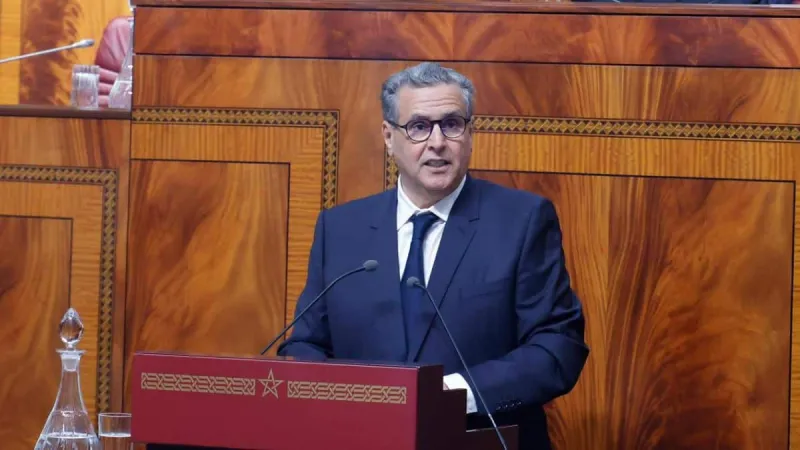
On July 2, 2026, Moroccan Prime Minister Aziz Akhannouch defended his government's agricultural record during a parliamentary session, addressing concerns over food sovereignty, rising prices, and persistent drought. Akhannouch highlighted investments in irrigation and subsidies for farmers as key measures to mitigate the impact of water scarcity.
According to official data, Morocco has faced six consecutive years of drought, with rainfall deficits reaching up to 60% in some regions. The government has allocated over $1 billion to water management projects, including desalination plants and drip irrigation systems, aiming to reduce agricultural water consumption by 30% by 2030.
Akhannouch also cited the 'Generation Green 2020-2030' strategy, which targets the modernization of 1 million hectares of irrigated land and the creation of 350,000 new agricultural jobs. However, critics argue that small-scale farmers remain vulnerable to price volatility and climate shocks, with food inflation exceeding 8% in early 2026.
The prime minister emphasized that Morocco's agricultural exports, particularly citrus and tomatoes, have grown by 15% year-on-year, but acknowledged that domestic food security requires further reforms. He called for a national dialogue on water management and agricultural subsidies to ensure long-term resilience.