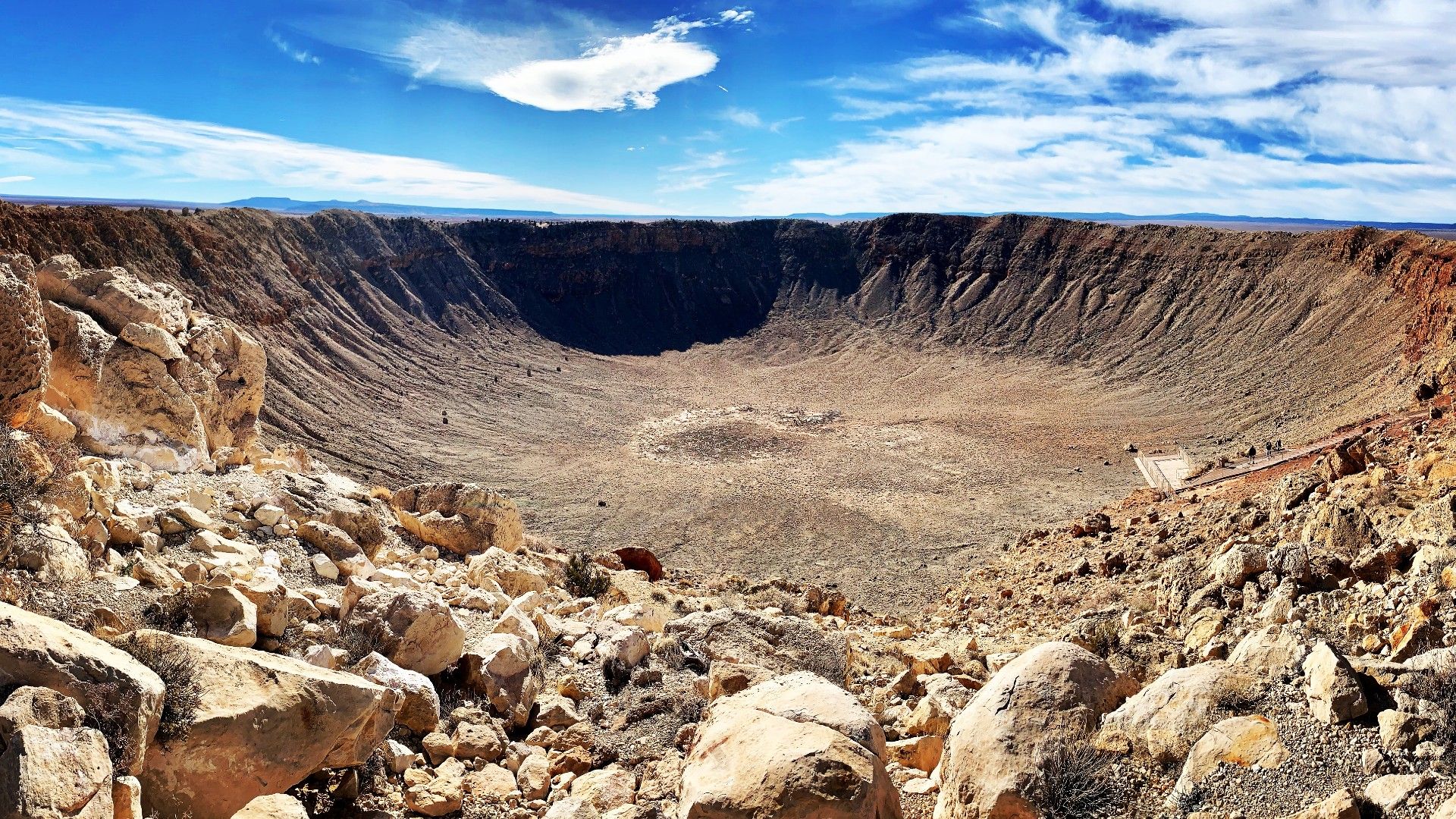
New research at Meteor Crater in Arizona, one of the best-preserved impact sites on Earth, continues to provide fresh insights into cosmic collisions. The crater, also known as Barringer Crater, was formed approximately 50,000 years ago by the impact of an iron-nickel meteorite.
Recent studies, including work published in the journal Meteoritics & Planetary Science, have used advanced mapping and modeling techniques to refine understanding of the impact's energy and the subsequent formation of the 1.2-kilometer-wide, 170-meter-deep structure. Scientists emphasize that the site serves as a crucial terrestrial analog for studying craters on other planetary bodies.
"The crater is still providing new insights every year, so continued studies there are really important," said a principle echoed by researchers at the site's affiliated museum and science center. Ongoing work focuses on the distribution of ejected material and shock metamorphism in the surrounding rock.