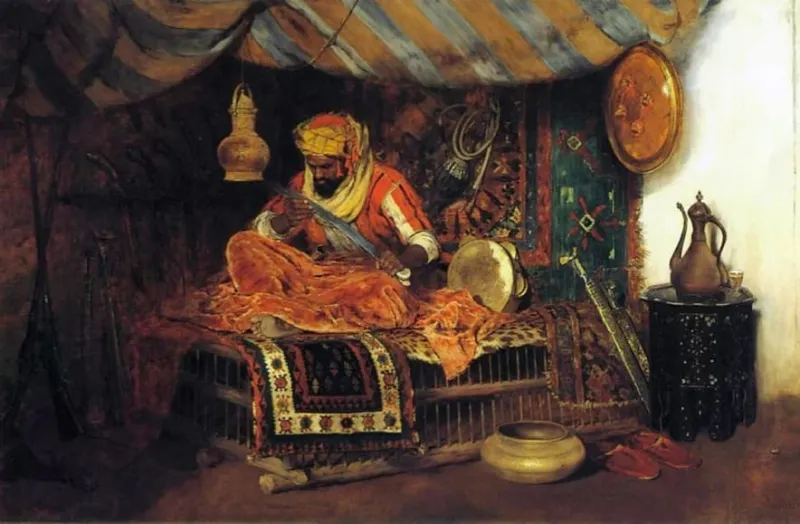
Ziryab (c. 789–857), a Persian polymath and musician, fled Baghdad after a conflict with his teacher and settled in Córdoba, Al-Andalus (modern-day Spain), under the patronage of Umayyad emir Abd al-Rahman II. Beyond his musical innovations, he is credited with transforming local dining customs.
Historical accounts, such as those by Ibn Hayyan and later Al-Maqqari, describe Ziryab introducing a structured meal sequence: starting with soup, followed by a main dish, and ending with dessert. He also popularized the use of crystal glasses instead of metal goblets, and tablecloths, elevating dining etiquette.
Ziryab is said to have brought new recipes and ingredients, including asparagus, and introduced the concept of seasonal menus. He also established a school of fashion and cuisine, influencing the gastronomic culture of Al-Andalus and, eventually, Europe.
While some details are embellished in later chronicles, his role in refining culinary arts in medieval Iberia is widely acknowledged by historians. His legacy persists in the fusion of Eastern and Western culinary traditions in the Mediterranean.