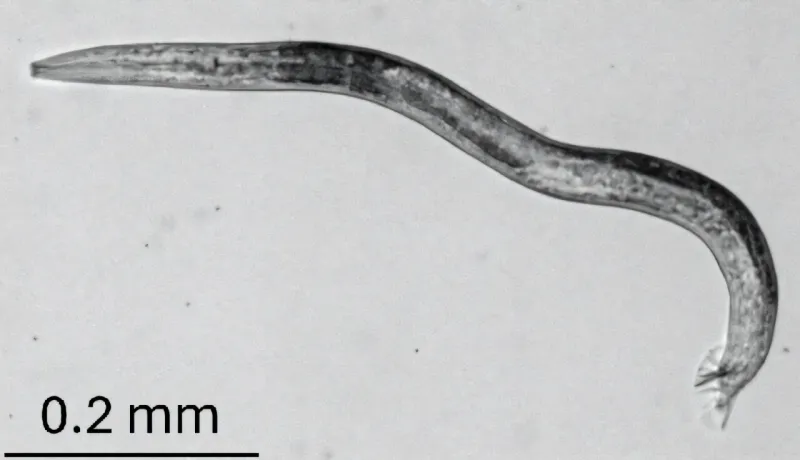
Researchers at Rutgers University have used a microscopic roundworm that lacks kidneys to investigate a genetic change suspected of causing a serious inherited kidney disease. By making a precise edit to the worm's DNA and tracking the proteins it produces, the team was able to study the function of a gene implicated in the human condition.
The roundworm, Caenorhabditis elegans, is a common model organism in genetics because its short lifespan and simple anatomy allow scientists to observe the effects of genetic changes quickly. Although the worm does not have kidneys, the gene under study is conserved across species, meaning findings in the worm can offer clues about how the gene works in humans.
The research focused on a specific genetic variant associated with an inherited kidney disease. By introducing the equivalent change into the worm's genome, the scientists could examine how the altered protein behaves and what cellular processes are disrupted. This approach helps pinpoint the mechanism by which the mutation might lead to disease.
Understanding the basic biology of such genetic changes is a step toward developing targeted treatments. The study highlights how model organisms can bridge the gap between gene discovery and understanding disease mechanisms, potentially guiding future research into therapies for inherited kidney disorders.