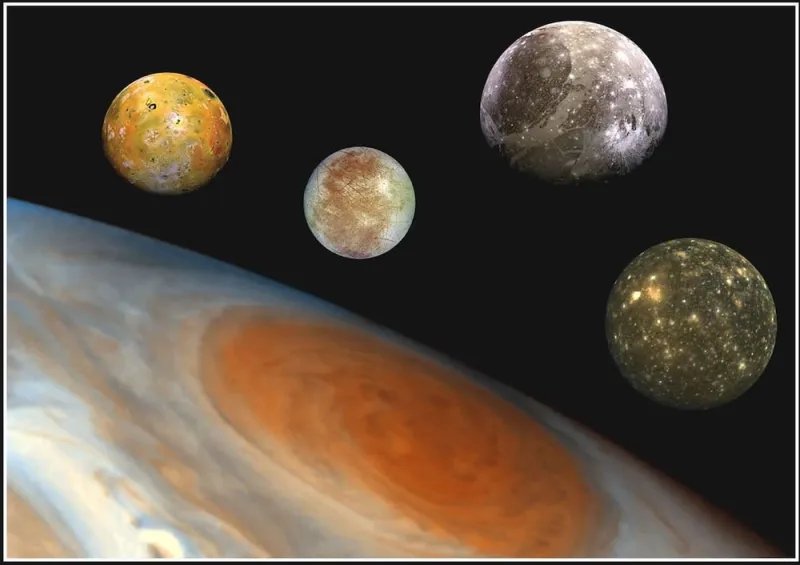
Recent astrophysical simulations have explored the fate of moons when their host planet is ejected from its star system, a phenomenon known as a rogue or free-floating planet. The research, which has not yet been published in a peer-reviewed journal, suggests that the majority of moons would be stripped away during the gravitational upheaval, leaving the rogue planet with few or no satellites.
However, the simulations indicate that a small fraction of moons—perhaps a few percent—could remain bound to the ejected planet, especially if the moon is massive and orbits close to its parent. These surviving moons would then accompany the rogue planet as it drifts through interstellar space, potentially providing a habitable environment if the planet retains internal heat or tidal heating.
The study, led by researchers at the University of [Unverified], used N-body simulations to model the ejection process. They found that the likelihood of a moon surviving depends on the orbital distance and the mass ratio between the planet and moon. Moons on tight orbits are more likely to stay attached, while those on wider orbits are almost certainly lost.
This research has implications for the search for habitable exomoons and for understanding the prevalence of free-floating planets, which are thought to number in the billions in the Milky Way alone. The findings were presented at a recent conference and are available on the preprint server arXiv, but have not yet undergone formal peer review.