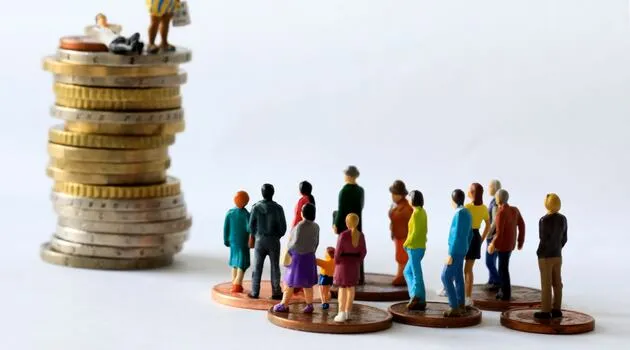
Wage inequality in the United States has been growing for decades, with the top 10% of earners taking home a larger share of national income. According to the Economic Policy Institute, from 1979 to 2023, wages for the top 1% grew by 179%, while wages for the bottom 90% grew by only 28%. This disparity is not only a social issue but also an economic one, affecting both workers and businesses.
Research from the International Monetary Fund (IMF) indicates that high income inequality can reduce economic growth by limiting opportunities for lower-income individuals. When workers are underpaid, they have less purchasing power, which reduces demand for goods and services. This can lead to lower business revenues and slower job creation.
For businesses, wage inequality can result in lower employee morale, higher turnover, and reduced productivity. A 2024 study by the Harvard Business Review found that companies with large pay gaps between executives and workers often experience lower levels of innovation and employee engagement. In contrast, firms with more equitable pay structures tend to have better financial performance over the long term.
Policy solutions, such as raising the minimum wage and strengthening collective bargaining rights, have been proposed to address these issues. The Congressional Budget Office estimated that a $15 federal minimum wage would lift 900,000 people out of poverty, though it could also lead to some job losses. As of 2026, the federal minimum wage remains $7.25 per hour, unchanged since 2009.