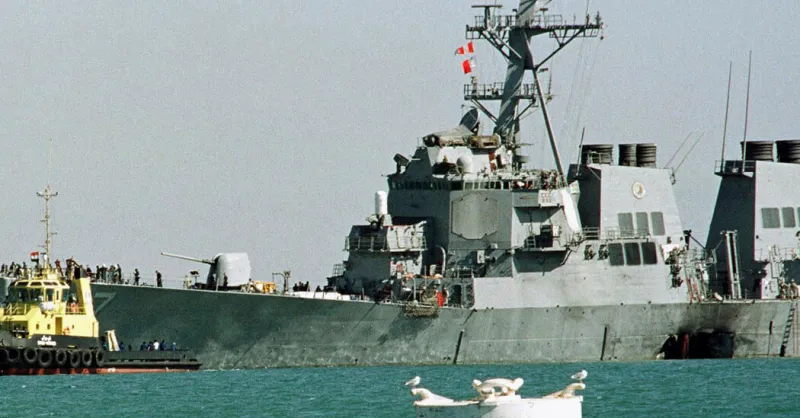
On October 12, 2000, the guided-missile destroyer USS Cole (DDG-67) was refueling in the port of Aden, Yemen, when it was attacked by suicide bombers in a small fiberglass boat. The explosion blew a 40-by-40-foot hole in the ship's port side, killing 17 U.S. Navy sailors and injuring 39 others. The attack was claimed by al-Qaeda.
The USS Cole bombing was a pivotal event that exposed critical vulnerabilities in U.S. warship defenses against asymmetric threats, particularly while in foreign ports. A subsequent U.S. Navy investigation found failures in force protection procedures and intelligence sharing.
In response, the U.S. Navy initiated a sweeping Force Protection program. This included the creation of the Naval Expeditionary Combat Command, the deployment of armed small boats as protective screens, enhanced intelligence gathering, and rigorous new training for sailors in close-quarters defense. Physical changes to ships, such as improved watertight compartmentalization and the installation of anti-sniper systems and non-lethal deterrents, were also implemented.
The lessons learned from the Cole attack continue to influence U.S. naval doctrine and ship design. The incident underscored the evolving nature of maritime threats and the necessity of protecting vessels not just at sea, but also during vulnerable in-port periods.