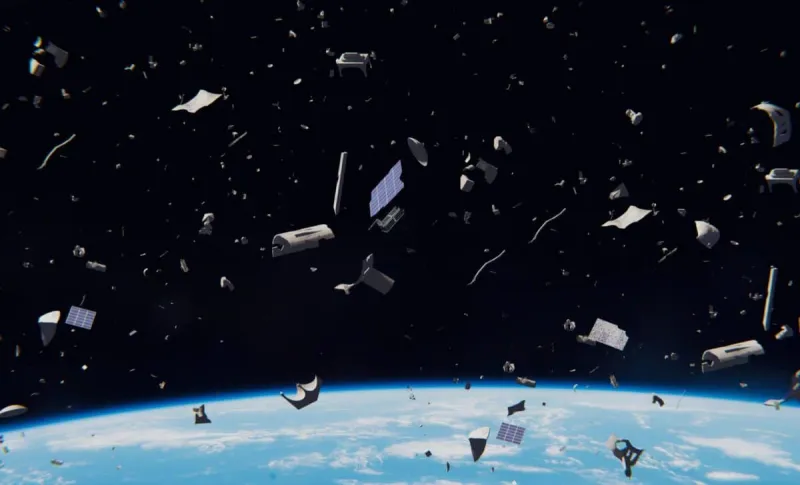
Two companies, ClearSpace and Astroscale, are pioneering space debris removal using innovative technologies like nets and harpoons. ClearSpace's mission, ClearSpace-1, aims to capture a defunct payload adapter from a 2013 Vega rocket launch, using a robotic arm with a net-like mechanism. Astroscale's ELSA-d mission, launched in 2021, successfully demonstrated a magnetic docking plate to capture a simulated debris piece in orbit.
Both companies plan to deorbit captured debris by dragging it into Earth's atmosphere, where it will burn up. ClearSpace-1 is scheduled for launch in 2026, while Astroscale is developing its ELSA-M service for multiple debris removals. These efforts address the growing problem of over 27,000 tracked debris objects in low Earth orbit, which pose collision risks to active satellites and the International Space Station.
The European Space Agency (ESA) is funding ClearSpace-1 as part of its Space Safety program, while Astroscale has secured contracts from the UK Space Agency and other partners. The technologies are designed to be scalable, with future missions targeting larger debris like defunct satellites. Both companies emphasize that debris removal is critical for sustainable space operations.