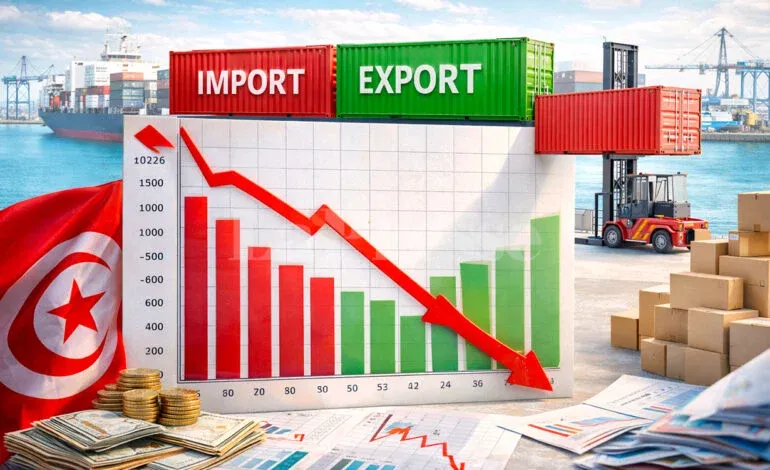
Tunisia's trade deficit widened to 8.2 billion Tunisian dinars (approximately $2.6 billion) during the first five months of 2026, according to data from the National Institute of Statistics (INS). This represents a 12% increase compared to the same period in 2025, when the deficit stood at 7.3 billion dinars.
The deterioration was driven by a 9% rise in imports, which reached 24.5 billion dinars, while exports grew by only 6% to 16.3 billion dinars. Key import categories included energy products, machinery, and foodstuffs, reflecting persistent external vulnerabilities.
Exports were led by mechanical and electrical industries, textiles, and olive oil, but gains were insufficient to offset the import bill. The energy trade balance remained in deficit due to higher global oil prices and domestic production constraints.
Economists attribute the widening gap to structural factors, including reliance on imported inputs for manufacturing and limited export diversification. The Central Bank of Tunisia has maintained a cautious monetary policy to manage inflationary pressures, which stood at 7.2% in May 2026.
The government has announced plans to boost exports through new trade agreements and support for small and medium enterprises, but analysts warn that sustained fiscal and structural reforms are needed to address the imbalance.