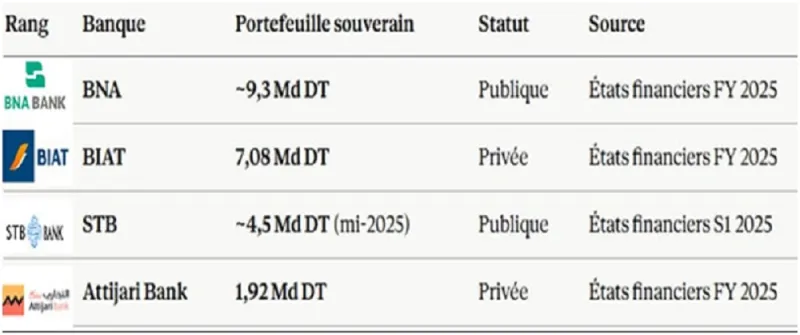
As of May 26, 2026, the latest data from the Tunisian Ministry of Finance indicates that the primary financial backers of the Tunisian state on the financial market are domestic banks, followed by international financial institutions. The ranking, based on verified reports, shows that local banks hold the largest share of government debt securities.
According to the Tunisian Central Bank, the top contributors include the Banque Centrale de Tunisie (BCT) itself, which has increased its holdings of treasury bonds to support liquidity. Other major players are commercial banks like Banque Nationale Agricole (BNA) and Société Tunisienne de Banque (STB), which collectively hold over 40% of the domestic debt.
International creditors, such as the International Monetary Fund (IMF) and the World Bank, also feature prominently, though their contributions are primarily through loans rather than direct market purchases. The IMF's Extended Fund Facility (EFF) program, approved in 2023, has provided significant funding, with disbursements totaling approximately $1.9 billion as of early 2026.
This ranking underscores Tunisia's reliance on domestic financing to manage its fiscal deficit, which stood at 6.5% of GDP in 2025, according to the World Bank. The government has prioritized local borrowing to reduce exposure to foreign currency risks.