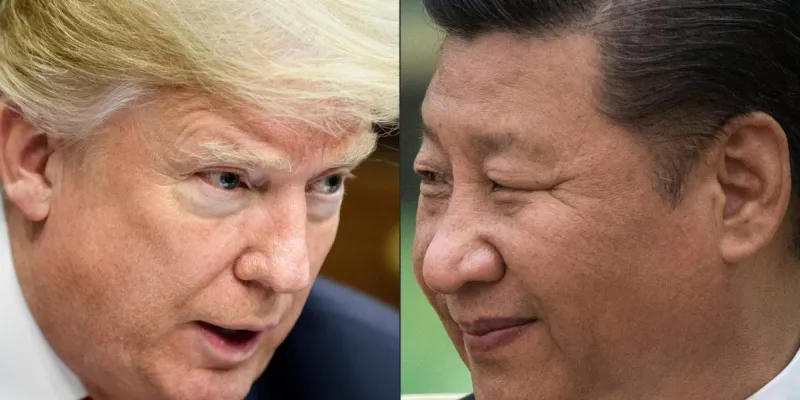
President Donald Trump is scheduled to visit Beijing on May 14-15, 2026, for trade talks. The visit comes amid ongoing tensions over tariffs and the Strait of Hormuz, where the US has sought China's help to ensure safe passage for oil tankers. However, China has spent the past six years diversifying its energy imports and reducing reliance on US markets, limiting Washington's leverage.
On May 4, 2026, US Treasury Secretary Scott Bessent appeared on Fox News, urging China to assist in reopening the Strait of Hormuz, which has been partially blocked by Iranian-backed Houthi attacks since late 2025. Bessent warned that failure to cooperate could lead to stricter tariffs on Chinese goods. China has not publicly responded to the request.
According to data from the US Census Bureau, US-China trade in goods fell to $537 billion in 2025, down from $690 billion in 2019, reflecting the impact of tariffs and supply chain shifts. China has also increased oil imports from Russia and Brazil, reducing its dependence on Middle East routes.
Analysts say Trump's leverage is limited. 'China has prepared for this moment,' said Dr. Li Wei, a trade expert at the China Institute of International Studies. 'They have built strategic reserves and alternative trade partners.' The White House has not commented on the specifics of the talks.