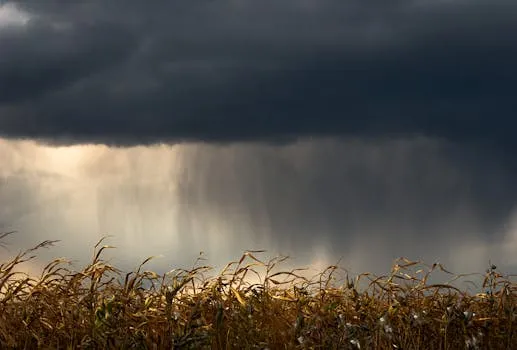
As of late April 2026, thunderstorms accompanied by rainfall are a common meteorological phenomenon in many parts of the world, particularly in temperate and subtropical zones. This pattern is driven by seasonal warming, which increases atmospheric instability and moisture availability.
According to the National Weather Service, spring thunderstorms are typical as warm, moist air clashes with lingering cool air masses. In the United States, for example, April averages 5-10 thunderstorm days in the central and southern Plains, with rainfall amounts varying widely.
Climate data from the World Meteorological Organization indicates that such events are not unusual for this time of year. However, local variations exist; regions like the Pacific Northwest may see fewer thunderstorms compared to the Southeast.
Residents are advised to monitor local forecasts for severe weather warnings, as thunderstorms can occasionally produce hail, strong winds, or tornadoes. Staying informed through official channels is recommended.