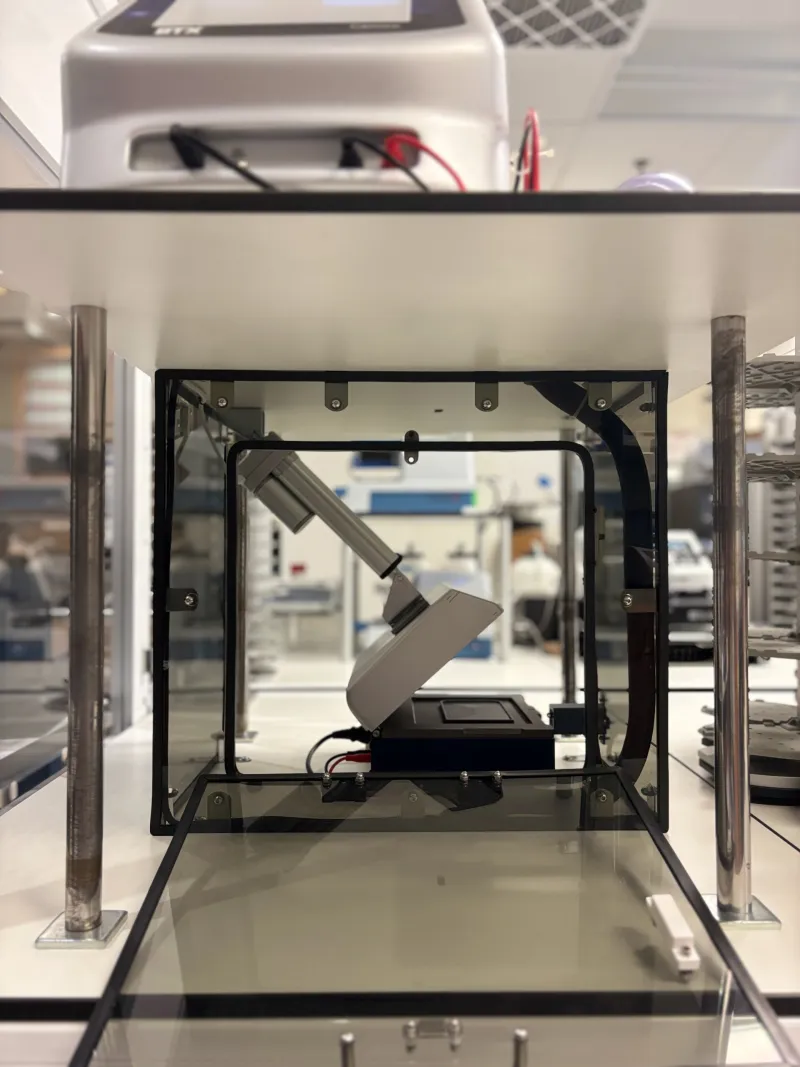
Inside the California NanoSystems Institute at UCLA, two students built a system that unlocks fully autonomous electroporation for 96- and 384-well workflows, as reported in a verified article. The system, developed at the Living Biofoundry, a core resource of the BioPACIFIC Materials Innovation Platform, automates the process of introducing molecules into cells using electrical pulses.
According to the source, the students identified an opportunity to automate electroporation, which is typically a manual or semi-automated process. The system is designed to handle high-throughput workflows, enabling researchers to process multiple samples simultaneously with precision and efficiency.
This innovation could accelerate research in synthetic biology, drug delivery, and genetic engineering by reducing human error and increasing throughput. The project was supported by the California NanoSystems Institute and the BioPACIFIC Materials Innovation Platform at UCLA.