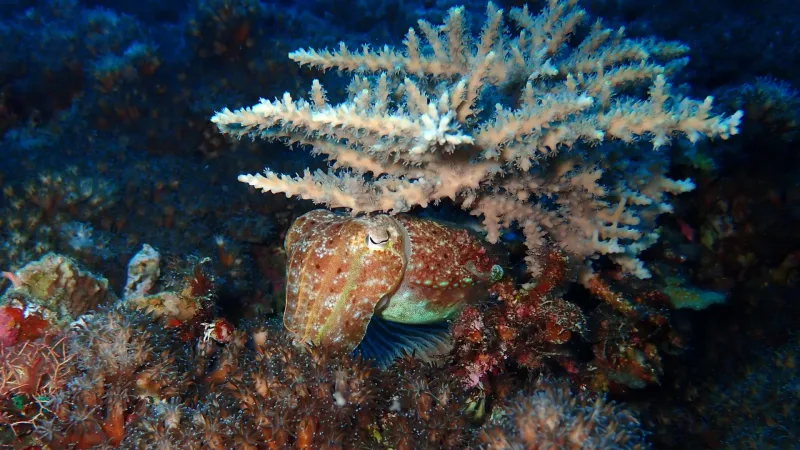
New genomic research has detailed the evolutionary history of squid, explaining how they survived Earth's largest mass extinction event. A study published in the journal Nature Ecology & Evolution by researchers from the Okinawa Institute of Science and Technology (OIST) analyzed large genomic datasets, including three newly sequenced squid genomes. The work reveals a "long fuse" pattern of evolution, where the lineage survived the Permian-Triassic extinction approximately 252 million years ago but did not rapidly diversify until much later.
The Permian-Triassic extinction, which wiped out roughly 90% of marine species, was a pivotal event. The research indicates that ancestral squid species persisted through this catastrophe. The subsequent diversification into the many modern species occurred over a prolonged period, with a significant increase in species richness much later in their evolutionary timeline, rather than an immediate explosion after the extinction event.
The study's findings provide a clearer picture of marine evolution and resilience. By combining fossil records with cutting-edge genomic analysis, the scientists have mapped a more accurate phylogenetic tree for coleoid cephalopods, which includes squid, cuttlefish, and octopuses. This research underscores how some lineages can endure global catastrophes through inherent biological robustness, setting the stage for future diversification when environmental conditions become favorable.