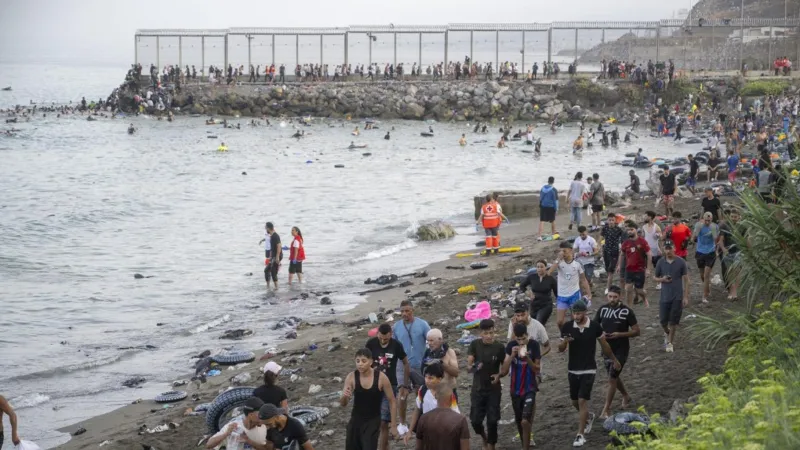
In late July 2026, a significant migrant surge occurred in the Spanish enclave of Ceuta (Sebta in Arabic), prompting international attention. According to reports, the crisis was preceded by a Spanish court ruling that limited the government's ability to carry out summary deportations, known as "hot returns" (devoluciones en caliente). The ruling, issued by a court in Madrid, was seen as a green light by migrant smugglers, who spread the news among potential migrants in Morocco.
The Spanish intelligence agency (CNI) had reportedly warned the Interior Ministry several times in the weeks before the crisis about the risk of mass arrivals, but the warnings were not heeded. The court decision, which was later appealed by the government, created a legal vacuum that was exploited by organized networks.
On July 30, hundreds of migrants, including many from sub-Saharan Africa, attempted to cross the border fence or swim around the breakwater into Ceuta. Spanish authorities responded with force, using tear gas and rubber bullets, and temporarily closed the border. The Moroccan authorities also increased patrols to prevent further crossings.
The incident has reignited the debate over migration policy in Spain and the European Union, with human rights organizations criticizing the use of force and the lack of legal pathways for asylum. The Spanish government has defended its actions, citing the need to protect the border and maintain public order.