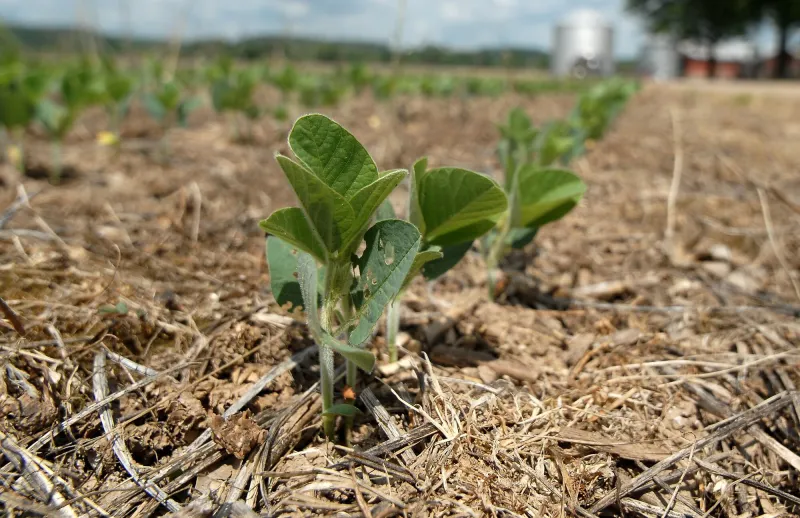
As of June 2026, soybean farmers are focusing on post-emergence applications to maximize yields. Key strategies include timing herbicide applications when weeds are small (less than 4 inches) and using adjuvants to improve efficacy. The University of Minnesota Extension recommends applying post-emergence herbicides within 21 days after planting for optimal control.
For nutrient management, foliar feeding of micronutrients like boron and manganese during the R1 to R3 growth stages can boost pod development. However, soil tests should guide applications to avoid over-fertilization. The USDA reports that 2026 soybean acres in the U.S. are estimated at 86.5 million, up 3% from 2025.
Weather conditions in 2026 have been variable, with some regions experiencing dry spells. Farmers are advised to scout fields regularly for pest pressure, especially soybean aphids and white mold. Integrated pest management (IPM) practices remain crucial for sustainable production.