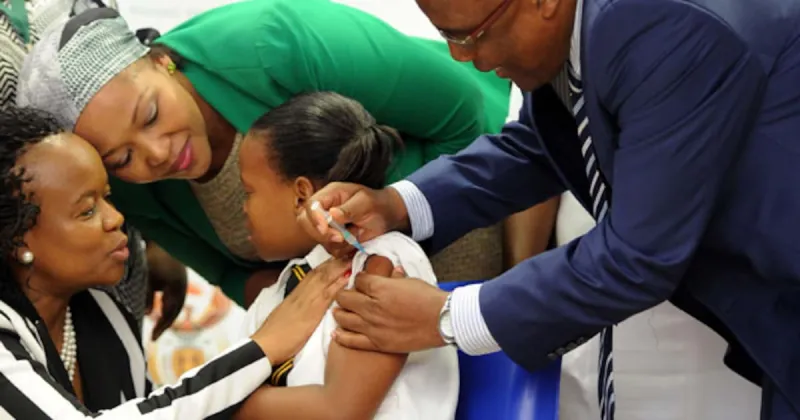
South Africa's Expanded Programme on Immunisation (EPI) follows World Health Organization (WHO) guidelines, providing free vaccines at public clinics. The schedule includes BCG at birth, polio (OPV at birth and 6 weeks, IPV at 18 months), and the hexavalent DTaP-IPV-Hib-HepB at 6, 10, and 14 weeks. Pneumococcal conjugate vaccine (PCV) is given at 6 weeks and 14 weeks, with a booster at 9–12 months. Rotavirus vaccine is oral at 6 and 14 weeks. Measles vaccine is at 6 and 12 months.
Globally, childhood vaccines have saved an estimated 154 million lives since 1974, according to a WHO study published in The Lancet (2024). South Africa's coverage rates for the third dose of DTaP-containing vaccine (DTP3) was 83% in 2023, below the 90% target, according to WHO/UNICEF estimates. Measles coverage for the first dose was 76% in 2023, also below target.
Challenges include vaccine hesitancy, supply chain issues, and the COVID-19 pandemic's disruption of routine immunisation. The South African government has launched catch-up campaigns and community outreach to improve coverage. As of 2026, the EPI schedule remains unchanged, with no new vaccines added since 2020.