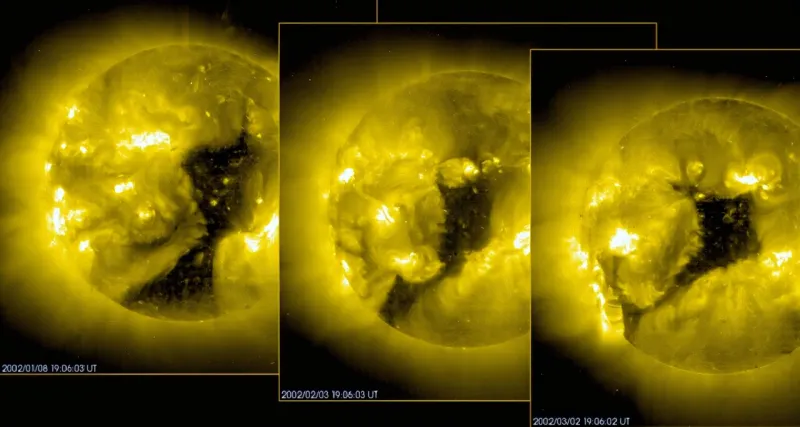
A joint European-Chinese spacecraft, the Solar Wind Magnetosphere Ionosphere Link Explorer (SMILE), launched on May 18, 2026, from the European spaceport in Kourou, French Guiana, aboard a Vega-C rocket. The mission aims to investigate how solar storms—extreme winds and giant explosions of plasma from the sun—impact Earth's magnetic shield, or magnetosphere.
Particularly fierce solar storms can disrupt satellites, power grids, and communications. SMILE will provide unprecedented observations of the interaction between the solar wind and Earth's magnetic field, helping scientists better predict space weather events.
The mission is a collaboration between the European Space Agency (ESA) and the Chinese Academy of Sciences (CAS). It carries four instruments: two from Europe and two from China, designed to capture X-ray and ultraviolet images of the magnetosphere.
SMILE will orbit Earth in a highly elliptical path, spending most of its time outside the planet's radiation belts to get a clear view of the magnetosphere. The mission is expected to last at least three years.