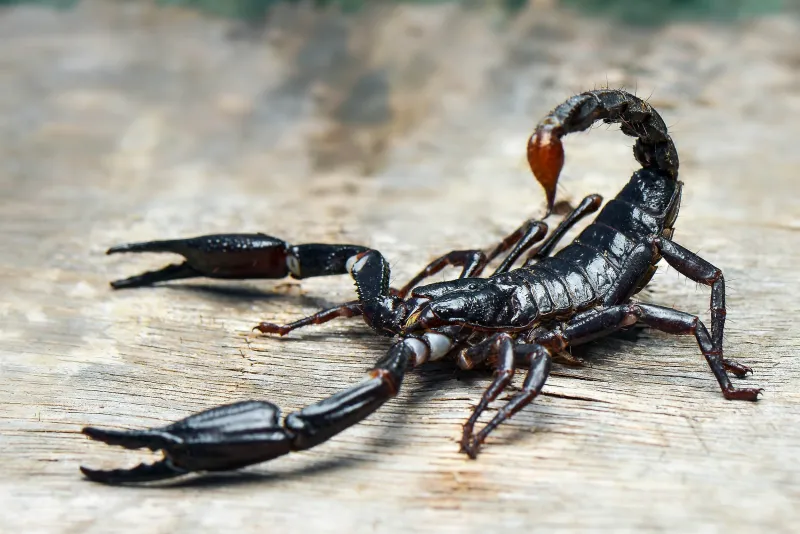
Scorpions have long fascinated scientists with their venomous stingers, but recent research has uncovered a surprising secret: their stingers are fortified with metals like zinc and iron. A study published in the journal Acta Biomaterialia in 2020 found that the stinger cuticle of scorpions contains high concentrations of these metals, which are incorporated into the chitinous structure, significantly increasing hardness and wear resistance.
Researchers from the University of California, Irvine, and other institutions analyzed the stingers of several scorpion species using advanced imaging techniques. They discovered that zinc and iron are distributed in a gradient, with the highest concentrations at the tip, where the stinger must penetrate tough prey exoskeletons. This metal reinforcement is not unique to scorpions; similar adaptations have been found in spider fangs and ant mandibles.
The study suggests that this biological metal incorporation is an evolutionary adaptation to reduce wear and maintain sharpness during repeated use. The findings could inspire new materials for engineering, such as self-sharpening tools or durable coatings. However, the exact mechanism by which scorpions incorporate metals into their cuticles remains under investigation.