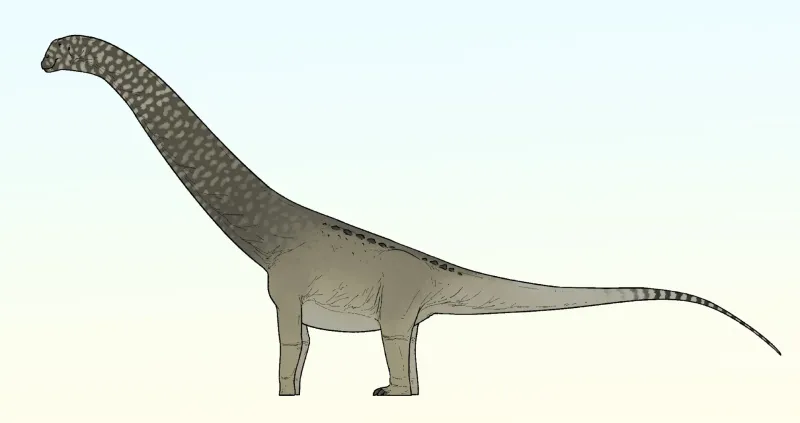
A new species of titanosaurian sauropod dinosaur has been identified in Morocco, based on fossils discovered in the Ouled Abdoun Basin near Khouribga. The species, named Phosphatotitan khouribgaensis, was described by an international team of paleontologists in a study published in the journal Diversity in April 2026.
The fossils, which include a partial skeleton with vertebrae and limb bones, were found in phosphate deposits dating to the Late Cretaceous period, approximately 66 million years ago. The name Phosphatotitan refers to the phosphate-rich environment where the remains were preserved, while khouribgaensis honors the city of Khouribga.
According to the research team, led by scientists from the University of Hassan II in Casablanca and the University of Portsmouth, Phosphatotitan khouribgaensis was a medium-sized titanosaur, estimated to have been about 15 meters long. Its discovery highlights the diversity of sauropods in Africa during the final stages of the dinosaur era.
The Ouled Abdoun Basin is known for its rich phosphate deposits, which have yielded numerous marine and terrestrial fossils from the Cretaceous and Paleogene periods. This find adds to the growing list of dinosaur species from North Africa, including the abelisaurid Chenanisaurus barbaricus and other titanosaurs.