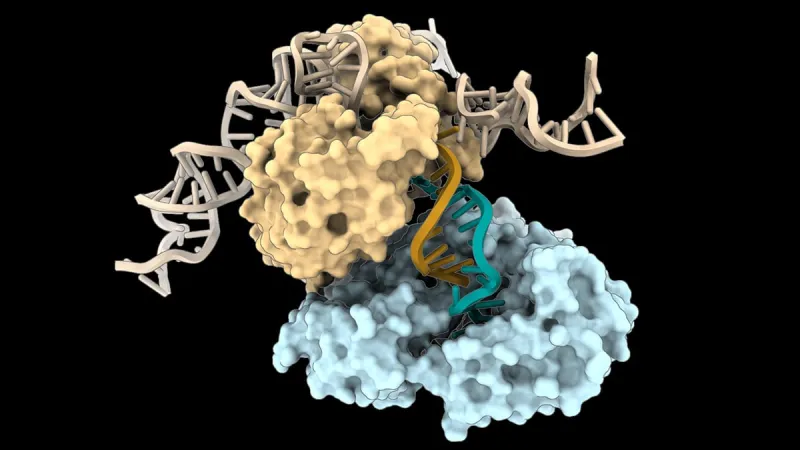
Scientists have discovered a fundamentally new mechanism for DNA synthesis that does not require a pre-existing template strand, a process long considered essential. The research, led by a team at the University of California, San Diego, and published in the journal Nature, reveals how the enzyme Thg1-like protein (TLP) can construct DNA in the opposite direction—from the 3' end to the 5' end—using only individual nucleotides as building blocks.
This "template-independent" synthesis represents a paradigm shift in molecular biology. All previously known DNA polymerases, the enzymes responsible for copying genetic material, strictly require a template to guide the order of nucleotides. The newly detailed activity of TLP enzymes shows they can add nucleotides sequentially without such a guide, a function thought to be crucial for DNA repair in mitochondria, the energy-producing organelles of cells.
The discovery, verified through biochemical and structural analyses, has significant implications for understanding the basic mechanisms of life and the origins of genetic replication. It also opens new avenues for biotechnology, potentially leading to novel tools for DNA manipulation and synthesis that could advance fields like synthetic biology and gene therapy.