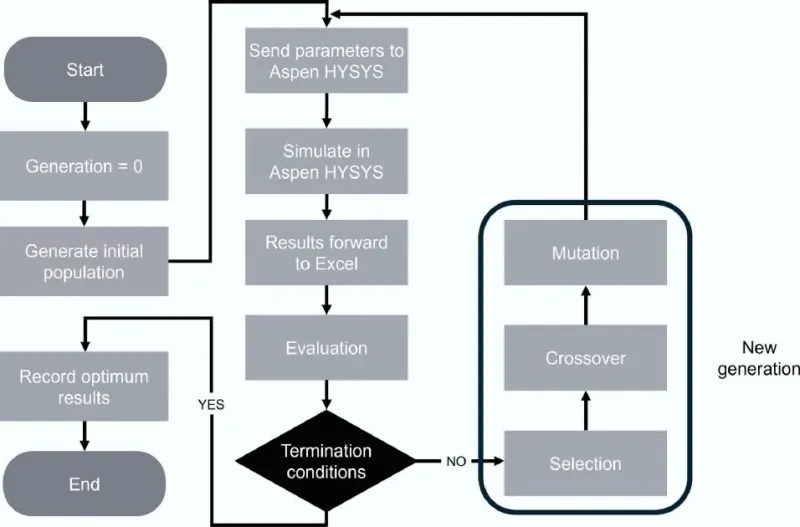
Recent research has explored the potential of using cold energy from liquefied natural gas (LNG) regasification to generate electricity. A study found that a two-stage Rankine cycle using hexafluoroethane (R116) in the upper cycle and ethane (R170) in the lower cycle could produce 7.5 MW of net power with a thermal efficiency of 24.1%.
When reheating was added to the system, the best configuration achieved even higher performance. The reheating process involves heating the working fluid between expansion stages, which can improve the overall efficiency of the cycle.
The findings suggest that optimizing the working fluid combination and incorporating reheating can unlock more power from LNG cold energy, which is typically wasted during regasification. This technology could help reduce energy costs and improve the sustainability of LNG terminals.