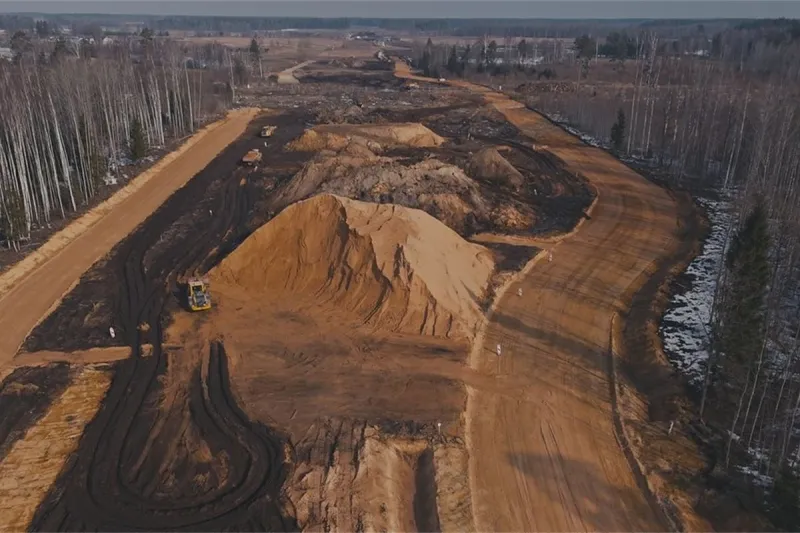
IECAVA, Latvia — One year ago, this 30-kilometer stretch of land south of Riga was dense pine forest. Today, crews rip up stumps, carve access roads and comb the ground for unexploded ordnance left behind from World War II. By August, Latvian officials say, the first 15 kilometers of track for the Rail Baltica high-speed railway will be laid here.
Rail Baltica is the European Union's largest infrastructure project, a 870-kilometer (540-mile) high-speed railway linking Tallinn, Estonia; Riga, Latvia; and Vilnius, Lithuania, with Warsaw, Poland, and eventually Helsinki, Finland. The project, estimated to cost €5.8 billion in 2017, has seen costs rise to an estimated €15 billion, according to the European Court of Auditors. The original completion date of 2026 has been pushed back to 2030 at the earliest.
The project faces significant challenges, including funding gaps, environmental concerns, and the need to clear unexploded ordnance from both world wars. In Latvia, the section from the Estonian border to Riga is the most advanced, with construction underway on bridges, viaducts, and the main line. However, the section from Riga to the Lithuanian border remains in the planning phase.
Proponents argue that Rail Baltica will transform the Baltic states' transport links, integrating them into the European high-speed rail network and reducing reliance on road transport. Critics question the escalating costs and whether the projected economic benefits will materialize, given the region's relatively low population density.