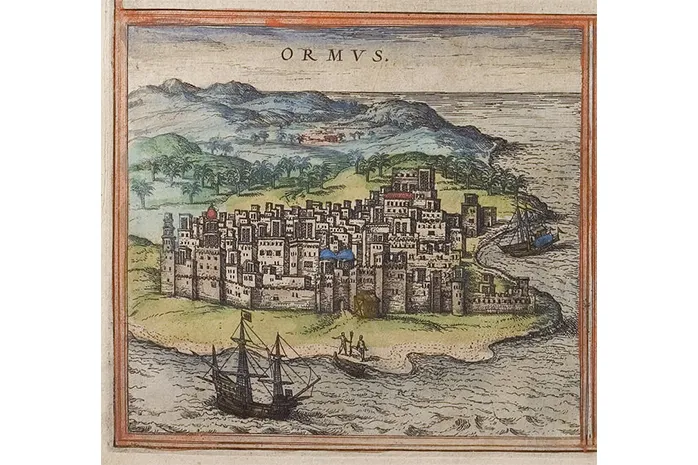
In 1507, Portuguese commander Afonso de Albuquerque captured the island of Hormuz, establishing a fortress and a critical foothold at the entrance to the Persian Gulf. This conquest was a key part of Portugal's strategy to dominate the spice trade by controlling major maritime chokepoints in the Indian Ocean.
For over a century, Portugal maintained its presence, using the fortress on Hormuz to levy taxes on merchant shipping and project naval power. The Estado da Índia, Portugal's Asian empire, relied on this outpost to secure its trade routes from competitors like the Ottoman Empire and various Arab and Persian states.
Portuguese control began to wane in the early 17th century due to pressure from the English East India Company and the resurgent Safavid Persian Empire. A joint Anglo-Persian force finally captured the fortress in 1622, ending over 115 years of Portuguese dominance in the Strait of Hormuz.
The legacy of this period is one of colonial competition and the assertion of European naval power in a region of immense global economic importance, a pattern that would continue for centuries.