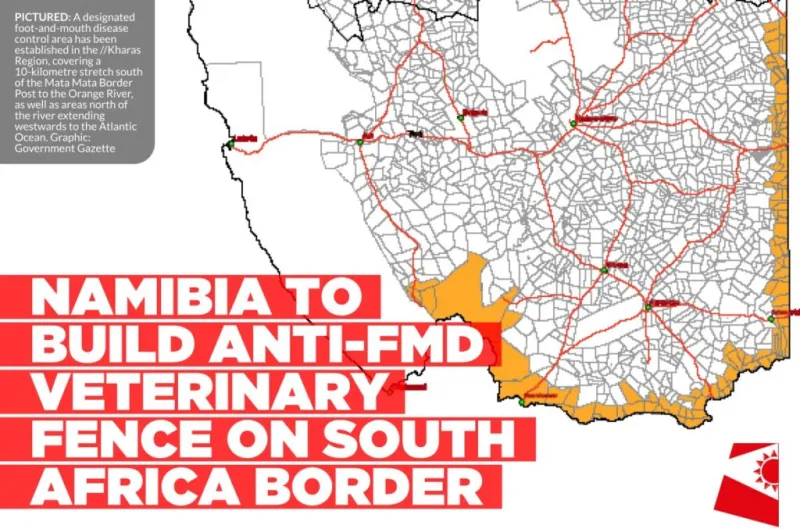
Namibia's Ministry of Agriculture, Water and Land Reform is advancing plans to construct a veterinary cordon fence along the Namibia–South Africa border to mitigate the threat of foot-and-mouth disease (FMD). The ministry has issued a tender invitation for contractors to bid on the project, as reported by local media on July 10, 2026.
The fence aims to prevent the spread of FMD from South Africa, where outbreaks have occurred in recent years, into Namibia's livestock zones. The project is part of broader efforts to protect Namibia's cattle industry, a key economic sector. The tender notice was published in the government's procurement portal, with bids due by August 2026.
According to the ministry's statement, the fence will be constructed in phases, starting with high-risk areas along the border. The initiative follows consultations with veterinary services and livestock associations. No specific budget has been disclosed publicly as of this report.
Foot-and-mouth disease is a highly contagious viral infection affecting cloven-hoofed animals, and Namibia has maintained a FMD-free zone in parts of the country, which is crucial for beef exports. The fence is intended to reinforce biosecurity measures and maintain Namibia's disease-free status.