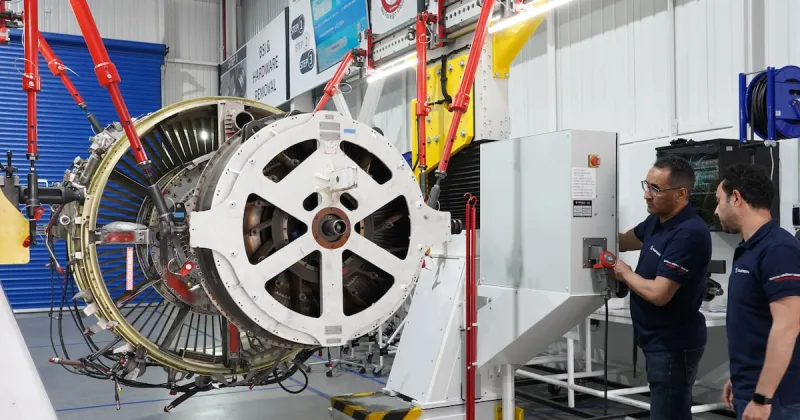
Morocco's aerospace industry is undergoing a strategic shift, moving away from basic subcontracting to the production of complex and critical components, according to verified reports. This transition is driven by the arrival of engine manufacturers and systems specialists, boosting the country's position in the global supply chain.
As of June 2026, the sector has attracted over $1.5 billion in investments since 2020, with major players like Boeing, Airbus, and Safran expanding their operations in Morocco. The country now produces parts for engines, landing gear, and electrical systems, with exports reaching $2.2 billion in 2025, up 15% from the previous year.
Industry experts highlight that Morocco's skilled workforce and proximity to Europe are key advantages. The government's 'Plan Aéronautique' aims to create 100,000 jobs by 2030, with current employment at 23,000 in the sector. However, challenges remain in developing local R&D and reducing reliance on foreign expertise.