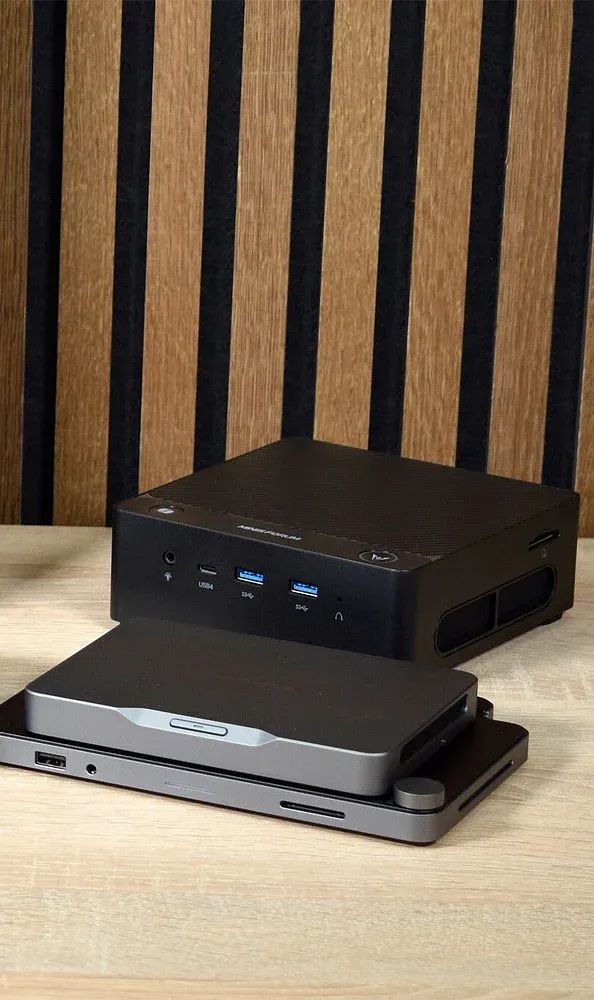
Mini PCs are compact computers that typically measure less than two liters in volume, yet they now pack the same processors found in full-sized desktops. Models built around AMD's Ryzen 7000/8000 series and Intel's 13th and 14th Gen Core chips deliver performance that covers office work, media playback, and even light gaming without the bulk of a traditional tower.
The category has grown as remote and hybrid work pushed buyers toward smaller, quieter machines. Vendors such as Intel with its NUC line, ASUS, Beelink, Minisforum, and Apple with the Mac mini have expanded their offerings, and many models support dual 4K displays, Wi-Fi 6E, and up to 64GB of RAM. Because they use laptop-class components, they also tend to draw less power than a full desktop.
Trade-offs remain. Mini PCs usually rely on integrated graphics, so demanding 3D games and professional GPU workloads still favor a full tower or an external GPU enclosure. Upgradability is limited: memory and storage can often be swapped, but the CPU and GPU are typically soldered. Repairability varies by brand, and some budget models use less common parts.
For most home and office users, however, a modern mini PC offers a compelling balance of size, power, and price. As component efficiency improves, these small machines are becoming a mainstream alternative to the traditional desktop for everyday computing.