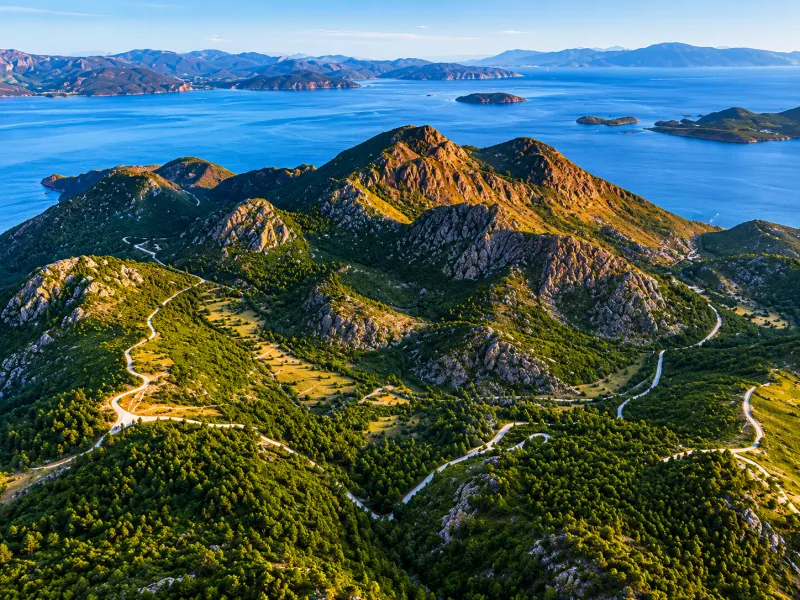
New research reveals that the Methana volcano in Greece, dormant for over 100,000 years, still harbors an active magma system beneath its surface. Scientists from the University of Geneva and other institutions analyzed tiny zircon crystals from volcanic deposits to trace the volcano's history.
The study, published in the journal Geology in 2025, found that magma has been accumulating in the crust for at least 100,000 years, with the most recent crystal growth occurring just a few thousand years ago. This suggests the volcano is not extinct but merely in a long period of quiescence.
Lead author Dr. Jonas Ruh from the University of Geneva stated, 'Our findings show that Methana is still an active volcanic system, even if it hasn't erupted in tens of thousands of years. This has implications for how we assess volcanic hazards globally.'
The Methana volcano is part of the South Aegean Volcanic Arc, which includes Santorini and Nisyros. While the risk of an imminent eruption is low, the discovery highlights that many volcanoes classified as 'extinct' may still pose potential hazards.