Astronomers are closely monitoring T Coronae Borealis, also known as the Blaze Star, a recurrent nova system located in the constellation Corona Borealis. This binary star system, consisting of a white dwarf and a red giant, is expected to undergo a thermonuclear eruption that will make it visible to the naked eye for the first time since 1946.
According to NASA, the eruption could occur anytime between now and September 2026. The system typically erupts approximately every 80 years, with previous recorded outbursts in 1866 and 1946. When it erupts, its brightness is expected to increase from magnitude +10 (too faint to see without a telescope) to magnitude +2, similar to the North Star.
Dr. Dennis Mammana, a noted astronomer and writer, has highlighted the growing anticipation among skywatchers. In a recent article, he noted that the Blaze Star's behavior has been erratic, with a recent 'pre-eruption dip' in brightness that often precedes such events. This has heightened expectations that the eruption is imminent.
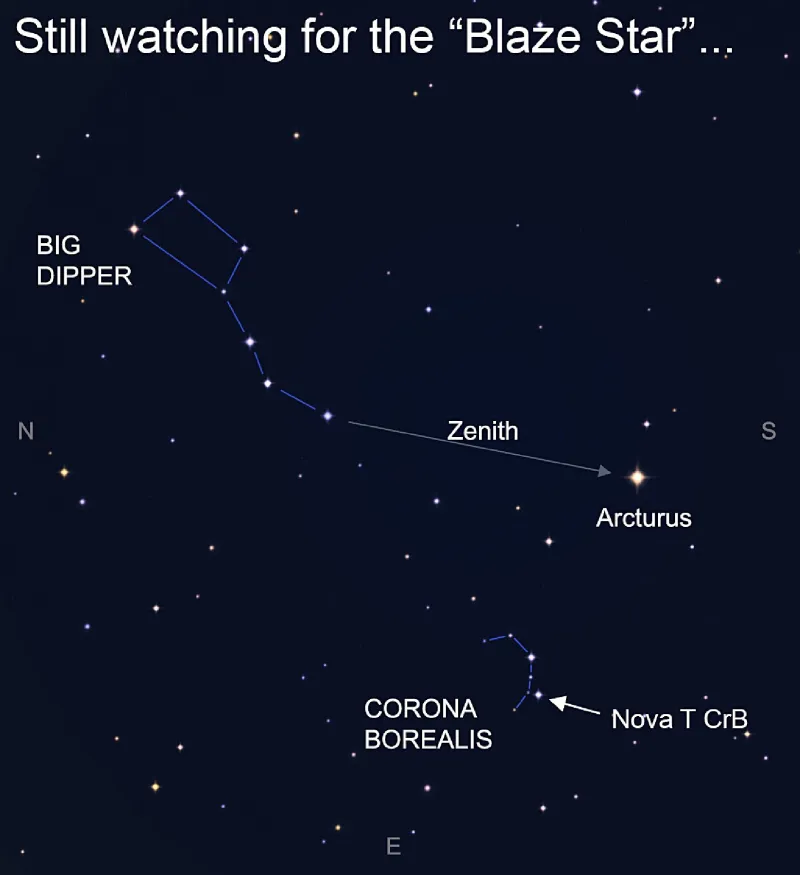
Observers are advised to locate the constellation Corona Borealis, a small semicircle of stars near Hercules. The nova will appear as a new star within that pattern. No special equipment is needed, but a dark sky away from city lights will provide the best view. The eruption is expected to last for several days to a week before fading.