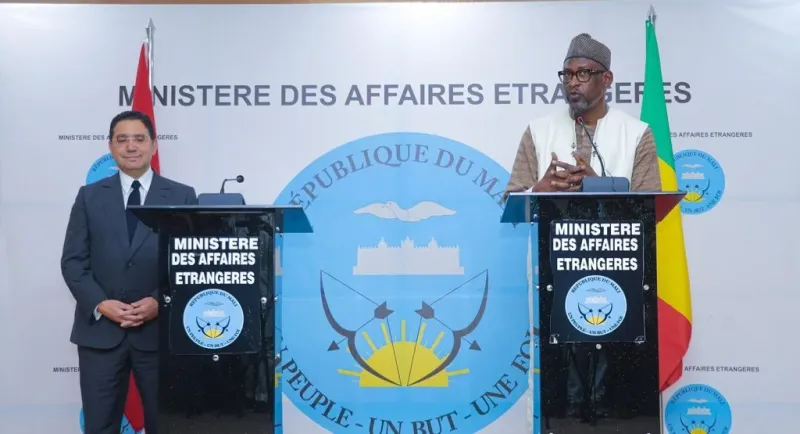
Mali's military-led government has officially severed its diplomatic relations with the Polisario Front, the Sahrawi independence movement that seeks self-determination for Western Sahara. The announcement marks a significant diplomatic realignment for the landlocked Sahel nation, which has been reshaping its foreign policy alliances since the military junta took power.
The decision signals a notable tilt toward Morocco, which administers most of Western Sahara and has long sought African diplomatic support for its autonomy plan for the territory. Morocco has been expanding its influence across West Africa, and Mali's move is seen as a strategic alignment with Rabat at the expense of ties with Algeria, which is the principal backer of the Polisario Front.
The break comes amid broader tensions between Mali's ruling junta and Algeria. Relations between Bamako and Algiers have deteriorated significantly in recent years, with disputes over security cooperation, the presence of Russian Wagner Group forces in Mali, and differing approaches to Sahel stability. Algeria's strong support for the Polisario Front has made Mali's ties with the movement increasingly untenable under the current government.
Mali is a member of the Alliance of Sahel States (AES), alongside Burkina Faso and Niger — three countries that have all distanced themselves from Western partners and traditional regional frameworks. The rupture with the Polisario Front is consistent with this broader pattern of diplomatic realignment, as the junta seeks new partnerships and reasserts sovereignty over its foreign policy choices.