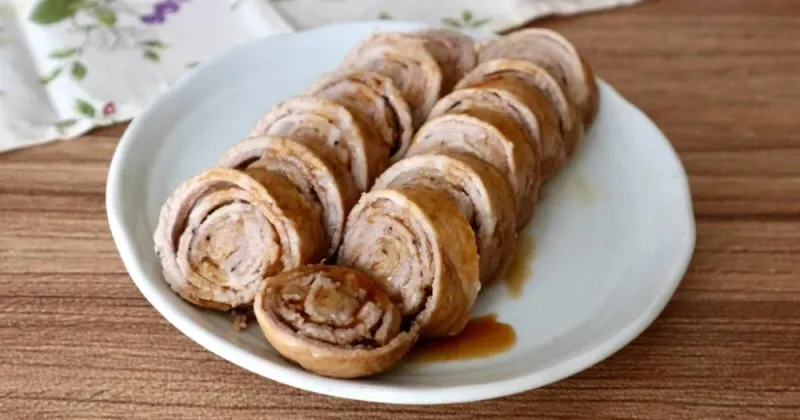
Chashu pork is a staple topping in Japanese ramen, prized for its tender, melt-in-the-mouth texture and rich, savory-sweet flavor. Traditionally slow-braised in soy sauce, mirin, sake, and sugar, chashu is the kind of dish that can seem intimidating to home cooks — but it doesn't have to be.
The kurukuru method — named after the Japanese onomatopoeia for rolling or spinning — involves tightly rolling a slab of pork belly, securing it with kitchen twine, and searing it in a frying pan before braising. This technique creates the characteristic spiral cross-section seen in ramen shops, and it requires no special equipment beyond a pan and some aluminum foil to help retain moisture during cooking.
The braising liquid typically combines soy sauce, mirin, sake, and sugar in roughly equal parts, simmered together until the pork is deeply colored and tender. Once cooled, the roll can be sliced into neat rounds and laid over a bowl of ramen, or refrigerated for several days. The leftover braising liquid doubles as a flavorful tare — a seasoning sauce — that can be stirred directly into ramen broth.
Home cooks looking to improve their ramen bowls often find that chashu is one of the highest-impact upgrades they can make. Paired with a soft-boiled marinated egg (ajitsuke tamago), bamboo shoots (menma), and a sheet of nori, homemade chashu transforms instant or store-bought ramen into a restaurant-quality meal. The kurukuru frying-pan method makes this achievable on any weeknight.