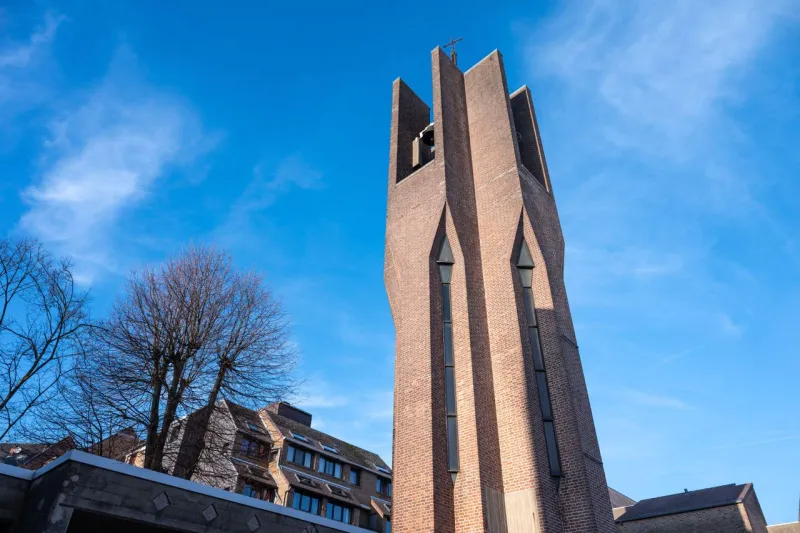
Louvain-la-Neuve, a planned university town in Belgium founded in the 1970s, is known for its distinctive architecture that combines cosmic brutalism, high modernism, and Catholic influences. The town was built to house the French-speaking Catholic University of Louvain after linguistic tensions split the original University of Leuven.
Key examples include the Church of Saint-François d'Assise, designed by architect Jean Cosse, which features a brutalist concrete structure with modernist elements. The town's central square, Place de l'Université, is surrounded by buildings that reflect the cosmic brutalism style, characterized by raw concrete and geometric forms.
The architectural blend reflects the town's dual identity as a modern academic center and a Catholic institution. The university's library and several faculty buildings also showcase this mix, with large concrete facades and functionalist designs.
As of 2026, Louvain-la-Neuve remains a vibrant example of late 20th-century urban planning, attracting architecture enthusiasts and scholars interested in the intersection of religion and modernism.