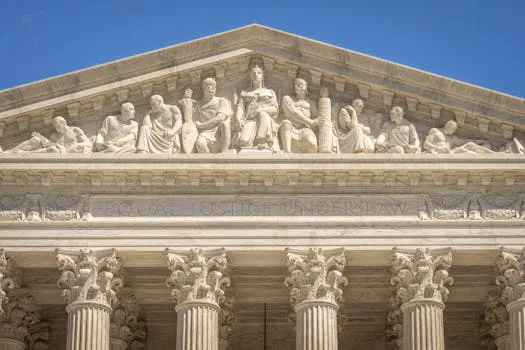
Public criticism of the U.S. Supreme Court and its justices is a form of protected political speech under the First Amendment. Legal experts consistently affirm that citizens, activists, and politicians have broad latitude to voice strong disapproval of the Court's decisions, ideological leanings, or individual justices.
However, there are clear legal boundaries. Federal law, specifically 18 U.S. Code § 115, makes it a crime to threaten to assault, kidnap, or murder a federal judge, including Supreme Court justices, with intent to impede or retaliate against them in their official duties. This statute has been the basis for recent prosecutions. In 2022, a California man was arrested for allegedly making threats against Justice Brett Kavanaugh.
The security landscape for justices intensified following the 2022 leak of the Dobbs v. Jackson decision draft and the subsequent protests at justices' private residences. In response, Congress passed and President Biden signed the Supreme Court Police Parity Act of 2022, expanding security protection for justices' immediate family members.
The line between protected protest and unlawful intimidation remains a subject of legal debate, particularly regarding organized demonstrations outside justices' homes. While such protests are often defended as free speech, law enforcement officials warn that they can cross into unlawful intimidation, especially if they aim to influence pending cases.