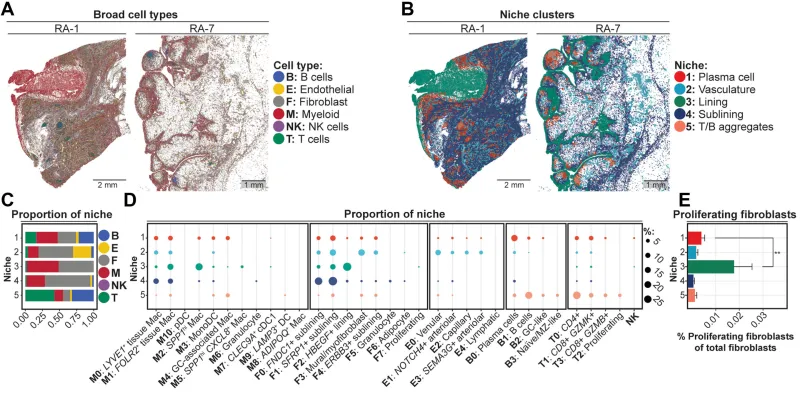
Researchers at Hospital for Special Surgery (HSS) have identified a specialized population of immune cells that plays a central role in driving abnormal tissue growth in rheumatoid arthritis (RA), offering new insight into disease progression and potential treatment targets. The study, published in a peer-reviewed journal, highlights the role of these cells in the formation of pannus, a destructive tissue that invades and damages joints.
The team used advanced techniques to analyze tissue samples from RA patients, discovering that a subset of immune cells, known as tissue-resident memory T cells, are key drivers of the abnormal growth. These cells produce factors that stimulate fibroblast-like synoviocytes, leading to the excessive tissue proliferation characteristic of RA.
This finding could lead to new therapies that specifically target these cells, potentially preventing joint damage and improving outcomes for patients. The researchers emphasize that further studies are needed to translate these findings into clinical applications.