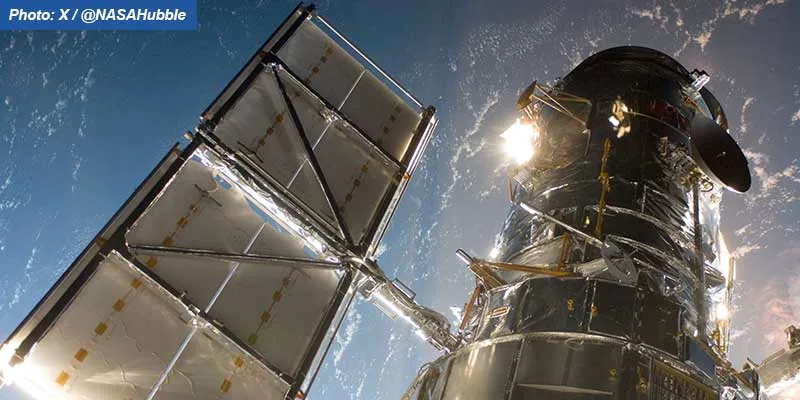
NASA's Hubble Space Telescope completed its 200,000th orbit around Earth on September 19, 2025, marking a significant milestone for the observatory that has revolutionized astronomy. Launched on April 24, 1990, aboard the space shuttle Discovery, Hubble has spent over three decades in low Earth orbit, traveling more than 5.3 billion miles (8.5 billion kilometers) and making over 1.6 million observations.
The telescope, a joint project of NASA and the European Space Agency (ESA), has been instrumental in numerous scientific breakthroughs, including helping determine the age of the universe, observing the birth and death of stars, and detecting water vapor in exoplanet atmospheres. Its iconic images, such as the Deep Field and the Pillars of Creation, have captured the public imagination and deepened our understanding of the cosmos.
Despite its age, Hubble remains operational, thanks to five servicing missions conducted by space shuttle astronauts between 1993 and 2009. The most recent servicing mission, STS-125 in 2009, installed new instruments and batteries, extending its lifespan. NASA continues to operate Hubble alongside the James Webb Space Telescope, which launched in 2021, to provide complementary observations across different wavelengths.
Hubble's 200,000th orbit is a testament to its enduring legacy and the ingenuity of the teams that have maintained it. As it continues to orbit at about 17,000 miles per hour (27,000 kilometers per hour), Hubble is expected to remain active into the 2030s, though its orbit is slowly decaying and it will eventually re-enter Earth's atmosphere.