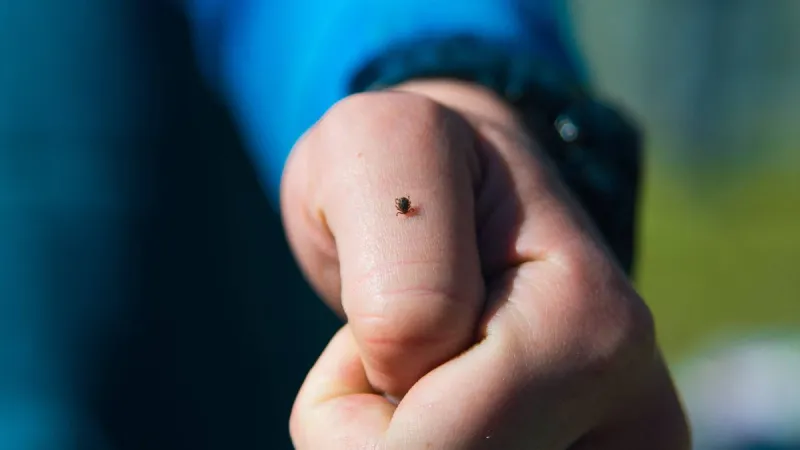
The Health Service Executive (HSE) has issued a warning about ticks and the risk of Lyme disease, stating that ticks are active across Ireland, particularly during the summer months. The alert is especially relevant for people spending time outdoors in grassy or wooded areas.
According to the HSE, ticks are small blood-sucking parasites that can carry bacteria causing Lyme disease. Early symptoms include a circular red rash around the bite site, often resembling a bull's-eye, along with flu-like symptoms such as fever, headache, and fatigue. If left untreated, Lyme disease can lead to more serious complications affecting the joints, nervous system, and heart.
The HSE advises people to take precautions such as wearing long sleeves and trousers, using insect repellent containing DEET, and checking for ticks after outdoor activities. If a tick is found, it should be removed carefully with tweezers, grasping it as close to the skin as possible and pulling steadily without twisting.
As of May 2026, the HSE has not provided specific statistics on tick populations or Lyme disease cases for this year, but the warning underscores the ongoing risk. The public is encouraged to seek medical advice if symptoms develop after a tick bite.