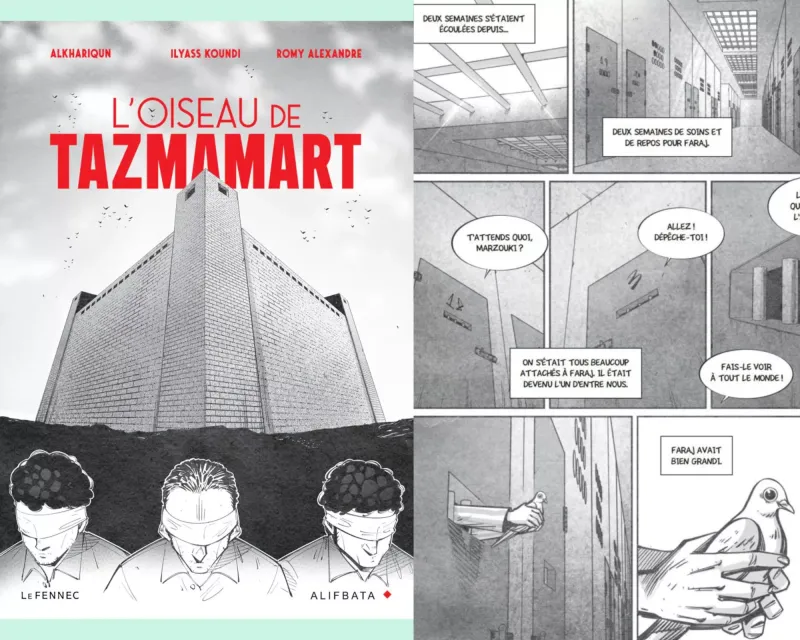
A graphic novel titled "Faraj, l'oiseau qui défiait Tazmamart" has been published, chronicling the harrowing true story of a survivor of Morocco's infamous Tazmamart prison. The book, created by author and illustrator Abdelaziz Mouride, is based on the testimony of former military officer Ahmed Marzouki, who was imprisoned there for 18 years.
Tazmamart was a secret detention center in Morocco, operational from the 1970s to the early 1990s, where political prisoners, primarily military officers involved in coup attempts, were held in brutal conditions. The facility was known for its isolation, darkness, and inhumane treatment, leading to numerous deaths.
The publication of this graphic novel is part of a broader effort to document and preserve the memory of this dark chapter in Moroccan history. It follows other works, like Marzouki's own memoir "Tazmamart: Cellule 10," which brought international attention to the prison's existence and the suffering of its inmates.
While the Moroccan state has since acknowledged and addressed some aspects of this period through its Equity and Reconciliation Commission, works like this graphic novel continue to serve as powerful tools for historical education and remembrance, ensuring that the stories of survivors are not forgotten.