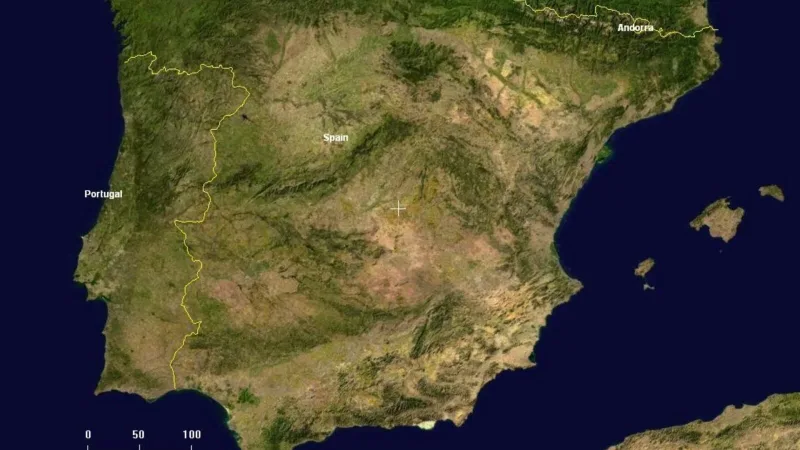
Recent analysis of high-precision GPS data has confirmed that the Iberian Peninsula, comprising Spain and Portugal, is undergoing a subtle but measurable counter-clockwise rotation. This movement, occurring over geological timescales, is driven by the complex tectonic interactions between the Eurasian and African plates along the Azores-Gibraltar fracture zone.
The rotation, detected by a network of permanent GPS stations, is causing a slow deformation of the peninsula. The northwestern part of Iberia is moving northeastward, while the southeastern part shifts southwestward. This tectonic behavior is distinct from the northward drift of the entire Eurasian plate and has significant implications for seismic hazard assessments in the region.
Geologists note this rotation helps explain the distribution and type of historical earthquakes in the western Mediterranean. The accumulated tectonic strain from this motion is a key factor in seismic risk models for southwestern Europe. The findings, published in peer-reviewed journals like Geophysical Journal International, refine the dynamic model of plate boundaries in this complex area.
While the movement is extremely slow—amounting to just a few millimeters per year—its long-term geological consequences are substantial. It influences mountain building processes, the evolution of sedimentary basins, and the overall geodynamic framework of the western Mediterranean. Continued GPS monitoring is essential for understanding these gradual yet powerful Earth processes.