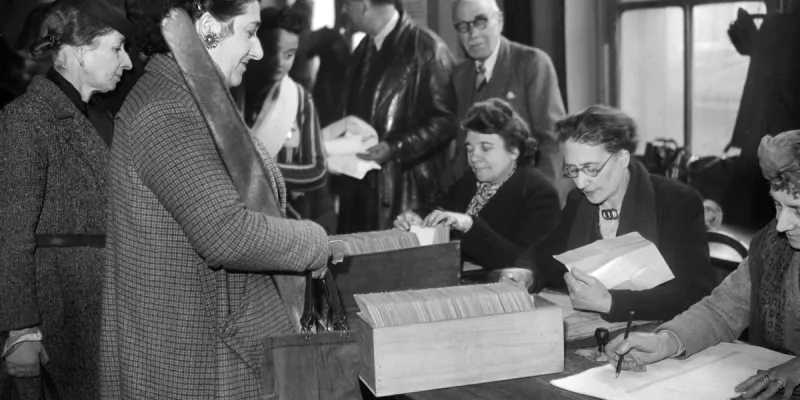
On April 21, 1944, the Provisional Government of the French Republic, led by General Charles de Gaulle, signed an ordinance granting women the right to vote and stand for election. This landmark decision was made in Algiers, where the government was based during the latter part of World War II.
The ordinance stated that "women are voters and eligible under the same conditions as men." This followed decades of activism by French suffragists. The first opportunity for French women to vote came in the municipal elections of April 29, 1945, after the liberation of France.
The move aligned France with other Western democracies that had already extended suffrage to women, though it lagged behind many, including New Zealand (1893), the United Kingdom (1918 for women over 30, 1928 for all), and the United States (1920). The 1944 ordinance was later confirmed and integrated into the constitution of the Fourth Republic in 1946.