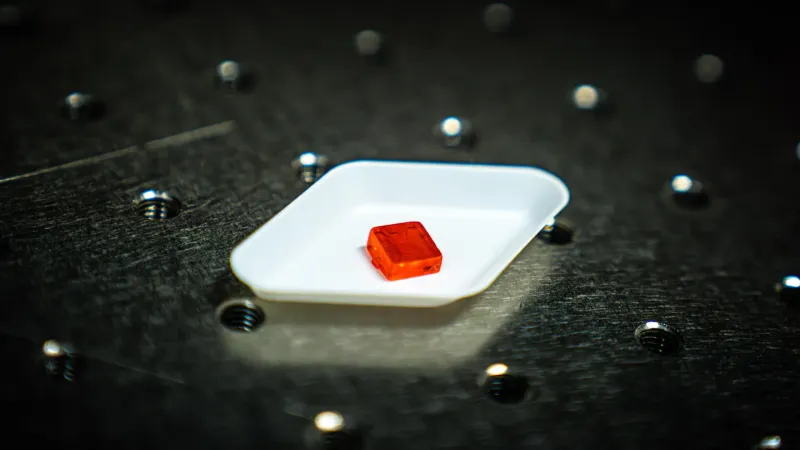
Over the past 15 years, lead-halide perovskites have emerged as one of the most promising materials in solar energy research. Unlike silicon, which requires highly controlled manufacturing processes developed over decades, perovskites can be produced using relatively simple, low-cost methods — and, counterintuitively, their inherent structural imperfections may actually contribute to their performance rather than hinder it.
Silicon solar cells currently dominate the market, but perovskite technology has been closing the efficiency gap rapidly. Laboratory perovskite cells have achieved power conversion efficiencies exceeding 26%, approaching the performance of commercial silicon panels. Researchers have found that certain grain boundaries and defects in perovskite crystal structures, rather than acting purely as performance drains, can play a complex role in how charge carriers move through the material.
A key challenge for perovskite solar cells remains long-term stability. Silicon panels are routinely warrantied for 25 years or more, while perovskite devices have historically degraded more quickly when exposed to moisture, heat, and prolonged light. However, recent research has made significant strides in encapsulation techniques and compositional engineering to address these durability concerns.
Tandem solar cells — which stack a perovskite layer on top of a silicon cell — represent one of the most actively pursued paths forward. These hybrid devices can theoretically capture a broader spectrum of sunlight than either material alone, with some tandem prototypes already surpassing 33% efficiency in laboratory conditions. The commercial viability of perovskite technology, whether standalone or in tandem configurations, is now considered a matter of engineering refinement rather than fundamental scientific doubt.