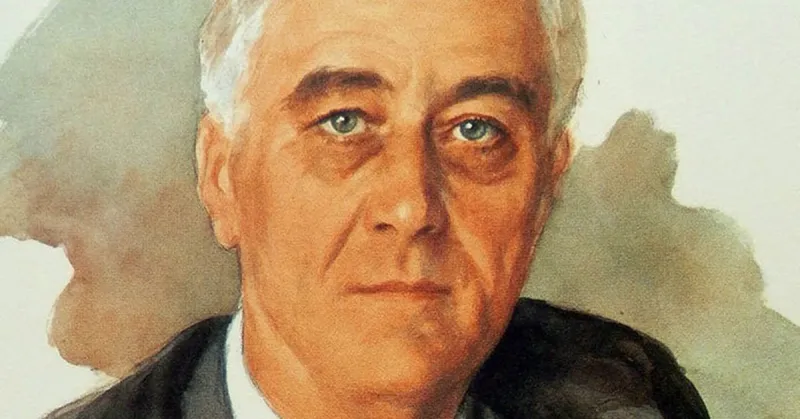
On April 12, 1945, President Franklin D. Roosevelt died at the Little White House in Warm Springs, Georgia, marking one of the most dramatic deaths of any sitting U.S. president. He had traveled to Warm Springs to rest, as he often did, and was sitting for a portrait when he suddenly complained of a severe headache before losing consciousness.
Roosevelt was being painted by Russian-born watercolor artist Elizabeth Shoumatoff when he said, "I have a terrific headache," then slumped forward in his chair. He had suffered a massive cerebral hemorrhage and never regained consciousness. He was pronounced dead at 3:35 p.m. local time, aged 63. Shoumatoff never completed the portrait, which became known as the "Unfinished Portrait" and is now preserved at the Little White House museum in Warm Springs.
Roosevelt had been serving an unprecedented fourth term as president, having led the United States through both the Great Depression and most of World War II. His death came just weeks before Germany's surrender on May 8, 1945, meaning he did not live to see the Allied victory in Europe he had worked so hard to achieve.
Vice President Harry S. Truman was sworn in as the 33rd President of the United States later that same day, April 12, 1945. It was Truman who would go on to make the decision to use atomic bombs against Japan, ultimately ending World War II in the Pacific. Eleanor Roosevelt famously informed Truman of her husband's death, to which Truman asked if there was anything he could do for her — she replied that it was she who should be asking what she could do for him, as he was the one now facing a great responsibility.