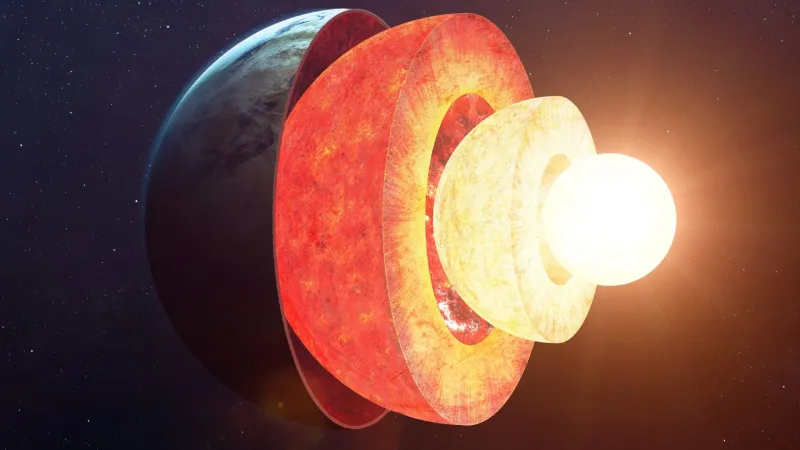
Astronomers have long assumed that rocky planets across the galaxy share a similar internal structure to Earth: a metallic core, a silicate mantle, and a thin crust. However, recent research suggests that super-Earths—planets with a mass between one and ten times that of Earth—may have radically different interiors.
According to a 2025 study published in Nature Astronomy, super-Earths could host deep magma oceans or even layers of diamond and graphite, depending on their composition and formation history. The study, led by Dr. Caroline Dorn at ETH Zurich, used computer models to simulate the interiors of these exoplanets under high pressure and temperature conditions.
Dr. Dorn stated, 'We found that the most common type of planet in the galaxy may not look anything like Earth on the inside. Some could have a thick layer of carbon in the form of diamond, while others might have a global magma ocean.'
These findings are based on data from the Kepler Space Telescope and ground-based observatories, which have identified thousands of exoplanets. The research highlights that the diversity of exoplanet interiors is far greater than previously thought, with implications for their potential habitability.