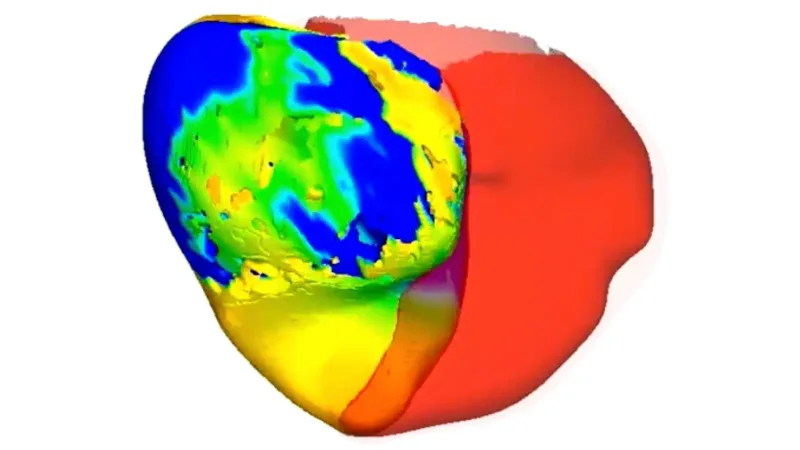
Researchers have demonstrated that a highly detailed digital replica, or 'twin,' of a patient's heart can be used to plan and guide treatment for a dangerous irregular heartbeat. The technique was tested in a clinical trial for patients with ventricular tachycardia, a life-threatening arrhythmia.
The study, published in the journal Nature Medicine, involved creating personalized computational models of 10 patients' hearts using MRI scans and clinical data. Doctors then used these models to simulate and plan catheter ablation procedures, a common treatment where small areas of heart tissue are scarred to block abnormal electrical signals.
In five patients, the digital twin accurately predicted the optimal ablation sites. The simulated procedures were then successfully replicated in the real patients, effectively treating the arrhythmia. This proof-of-concept suggests the approach could make complex ablation procedures more efficient and effective.
The research, led by scientists from institutions including Johns Hopkins University, represents an advance in personalized medicine for cardiac care. Further large-scale trials are needed to confirm the benefits before the technique could see wider clinical use.