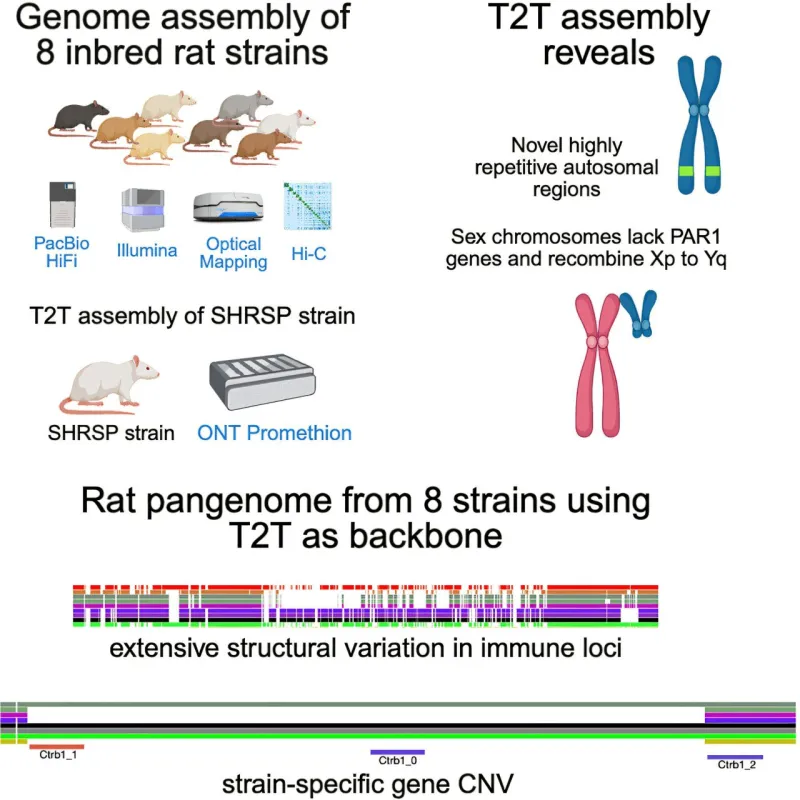
Researchers led by UTHealth Houston have assembled the most complete genetic sequence of the brown rat (Rattus norvegicus) to date, according to a study published in the journal Nature on August 5, 2026. The telomere-to-telomere (T2T) assembly provides a continuous, gap-free map of all 22 chromosomes, including the Y chromosome, which was previously incomplete.
The brown rat is a crucial model organism in biomedical research, used to study a wide range of human conditions, including heart disease, kidney disease, diabetes, and neurological disorders. The new genome assembly corrects errors in the previous reference genome and adds about 10 million base pairs of previously unknown sequence, according to the research team.
“This high-quality genome will allow researchers to more precisely identify genetic variations associated with disease and better translate findings from rat models to human health,” said Dr. Michael A. Mancini, co-corresponding author and professor at UTHealth Houston’s McGovern Medical School. The team used advanced long-read sequencing technologies and computational methods to achieve the complete assembly.
The improved reference genome is expected to enhance studies of gene regulation, evolution, and disease susceptibility. It also provides a more accurate platform for developing rat models of human diseases, potentially accelerating drug development and personalized medicine approaches.
The study was a collaborative effort involving researchers from UTHealth Houston, the National Institutes of Health, and other institutions. The genome assembly is publicly available for the scientific community.