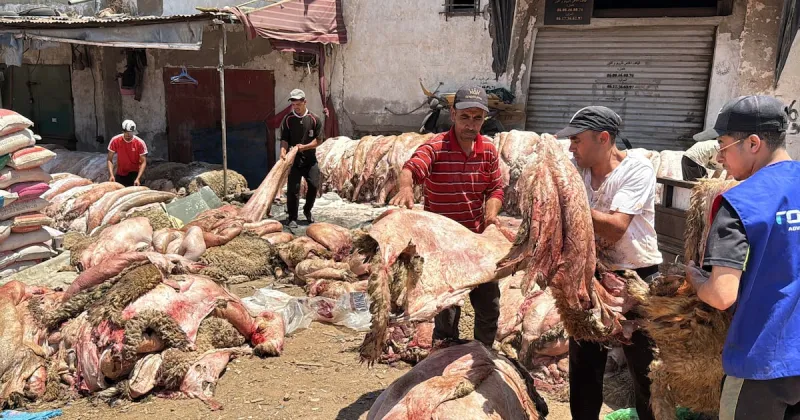
In the heart of Casablanca, a market entirely dedicated to the sale of sheepskins perpetuates an artisanal tradition that feeds an ancient and structured economic sector. Contrary to what one might assume, the vendors who set up there are not simple intermediaries but often master tanners who master ancestral techniques passed down through generations.
This market, located in the old medina, has been a hub for leather crafts for centuries. According to local historians, the trade in sheepskins dates back to the 14th century, when Casablanca was a key port for the export of Moroccan leather goods. Today, the market faces challenges from synthetic materials and changing consumer preferences, but it remains a vital part of the local economy.
Recent reports from the Moroccan Ministry of Industry and Trade indicate that the leather sector employs over 150,000 people nationwide, with a significant portion in Casablanca. The sheepskin market alone processes an estimated 500,000 skins annually, supplying tanneries and artisans across the country.
Despite modernization, the market retains its traditional character. Vendors still use natural dyes and hand-stitching techniques, though some have adopted mechanized tools to increase efficiency. The market's resilience reflects a broader trend in Morocco's artisanal sector, which balances heritage with innovation.