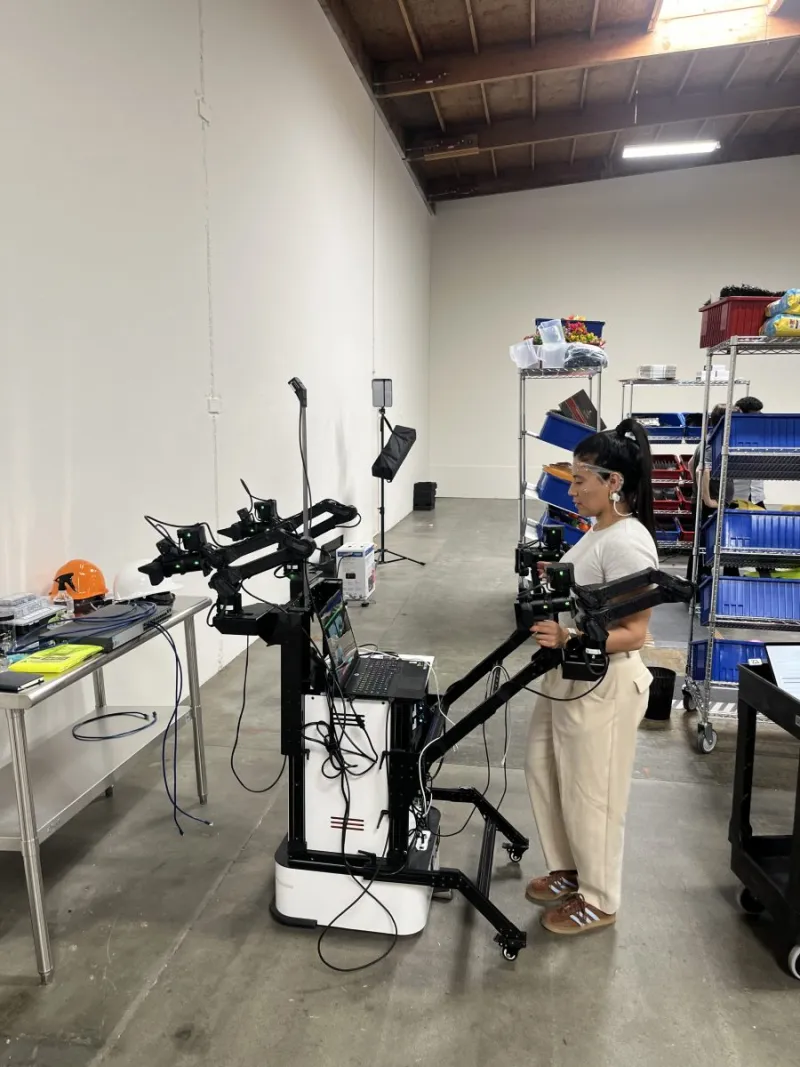
In a warehouse in San Leandro, California, Encord is pioneering a new approach to physical AI by incorporating brain wave data into robotic training. The company, which builds data tooling for AI models, uses a system where human pilots—like Andrew Ceja—wear EEG headsets to monitor their brain activity while performing tasks such as playing Jenga. This data is then used to train robots to understand human intent and improve their physical interactions.
Encord's method aims to bridge the gap between human cognition and robotic action, potentially accelerating the development of physical AI that can operate in complex, real-world environments. The company's focus on brain waves represents a shift from traditional training methods, which often rely on large datasets of labeled images or videos.
While still in early stages, this technique could have applications in manufacturing, healthcare, and logistics, where robots need to adapt to dynamic human environments. Encord has not yet released specific performance metrics, but the approach highlights a growing trend in AI research to integrate neural signals into machine learning pipelines.