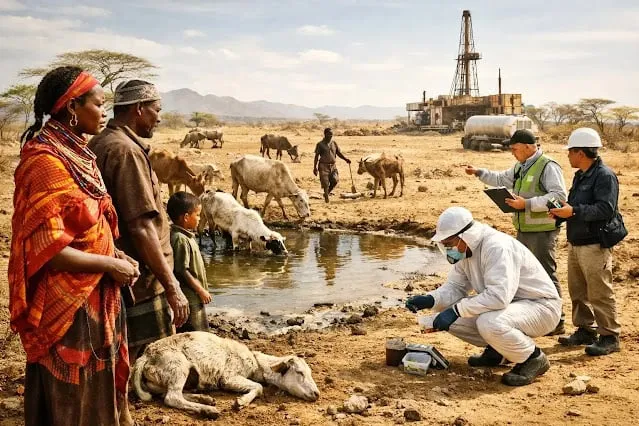
Oil exploration in northern Kenya began in the early 1980s, with companies like BP seeking new reserves in the Marsabit and Chalbi Desert regions. While the promise of economic opportunity and modern infrastructure was made to local pastoralist communities, the reality has been different.
According to reports from organizations such as Amnesty International and local environmental groups, the operations have led to water contamination, land degradation, and health issues among the local population. In 2024, a study by the University of Nairobi found elevated levels of hydrocarbons in water sources near exploration sites, linked to increased cases of respiratory and skin diseases.
BP has stated it follows Kenyan regulations and international standards, but community leaders in Marsabit have documented cases of livestock deaths and crop failures they attribute to oil activities. The company has not publicly acknowledged direct responsibility for these incidents.
The Kenyan government has maintained that oil exploration is vital for economic development, but critics argue that the benefits have not reached the affected communities. As of 2026, no major oil production has started in the region, and the social and environmental costs continue to be a point of contention.