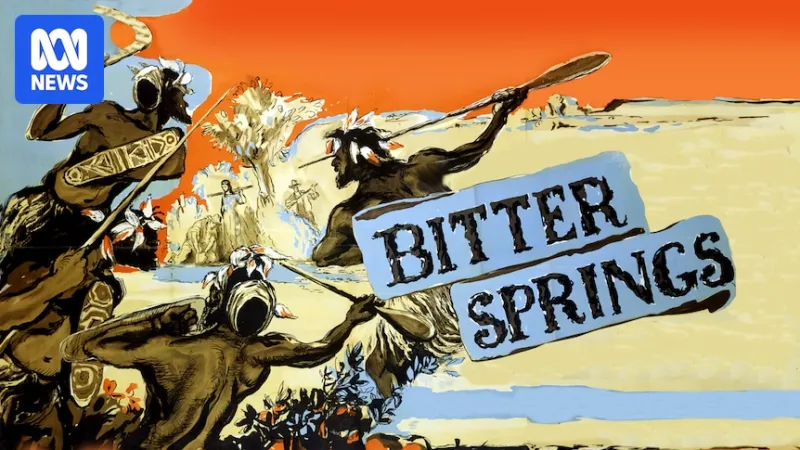
Nearly 80 years after the release of the 1949 Australian film Bitter Springs, the Pitjantjatjara lines spoken by its Aboriginal actors have been translated, offering new insight into the film's cultural significance. The translation project, reported by the ABC in May 2026, revealed that the characters' dialogue includes references to traditional knowledge and land, rather than being simple background chatter as long assumed.
The film, set in South Australia's remote outback, features Aboriginal actors from the Pitjantjatjara and Yankunytjatjara communities. For decades, the Pitjantjatjara lines were not subtitled or translated, leading to assumptions that they were improvised or irrelevant. However, the new translation shows that the actors were speaking coherently about their connection to country and cultural practices.
Linguists and community members worked together on the translation, which was supported by the South Australian Museum. The project aims to correct historical misunderstandings and honor the contributions of the original Aboriginal cast, many of whom were not credited at the time. The translation also highlights the resilience of Pitjantjatjara language and culture.
This development comes as part of broader efforts in Australia to recognize and preserve Indigenous languages and histories. The film, originally a colonial-era drama, is now being re-evaluated through a more critical lens, with the translated dialogue providing a richer, more accurate representation of the Aboriginal perspective.