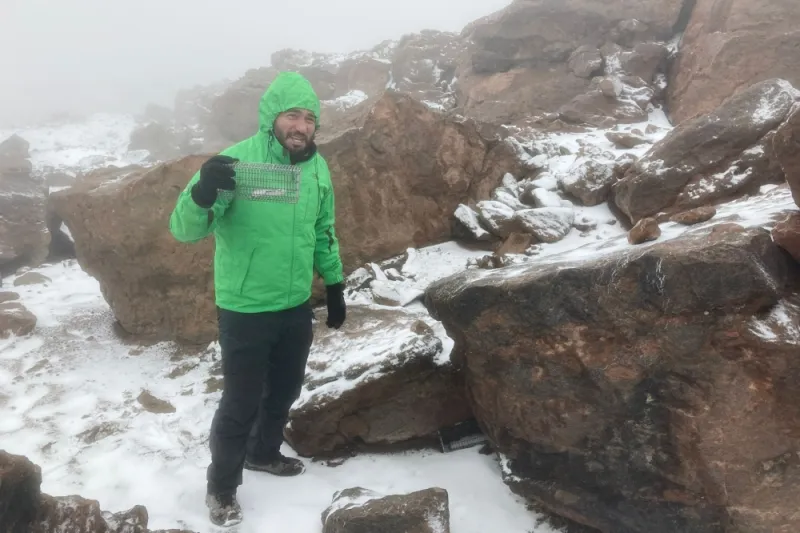
WASHINGTON, July 11 — The Andean leaf-eared mouse (Phyllotis xanthopygus) has been confirmed to live at altitudes exceeding 6,700 meters (22,000 feet) on the summit of Llullaillaco volcano in the Andes, according to a study published in Current Biology in 2020. This makes it the highest-dwelling mammal on Earth, surpassing even the Himalayan jumping spider.
Researchers from the University of Nebraska-Lincoln and other institutions captured specimens at the volcano's peak, where oxygen levels are about 40% of those at sea level and temperatures can drop below freezing. The mouse's ability to survive in such extreme conditions challenges previous assumptions about mammalian physiology.
The study, led by biologist Jay Storz, found that the mice have unique adaptations, including efficient oxygen utilization and metabolic changes, though the exact mechanisms are still under investigation. The discovery was made during expeditions in 2013 and 2015, with genetic analysis confirming the species.
This finding has implications for understanding how mammals can adapt to extreme environments, potentially informing research on human altitude tolerance and climate change impacts on high-altitude ecosystems.